Open the .numbers file in Apple Numbers, then export it as CSV. CSV contains table values rather than Numbers formatting, formulas, and charts, so keep the original Numbers file if you may need to edit those later.
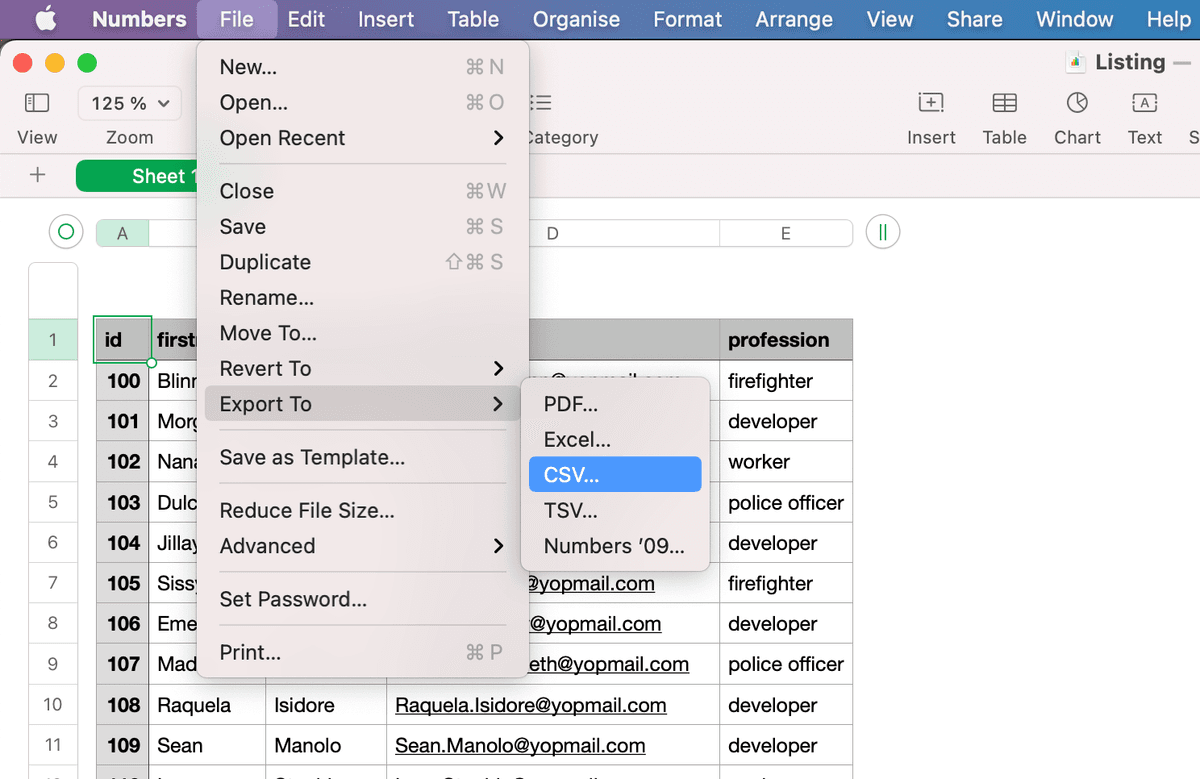
In Numbers, choose File > Export To > CSV.
If the spreadsheet has multiple tables, choose whether to create one CSV file per table or combine the tables into one file. Separate files are easier to check when tables have different columns. Use Advanced Options to choose a text encoding if the receiving application requires one.
💡 If you plan to import the CSV into a tool that treats the first row as column headers, leave Include table names off. Otherwise, a table name can appear ahead of your column headers. Turn it on only when the receiving workflow expects those names.
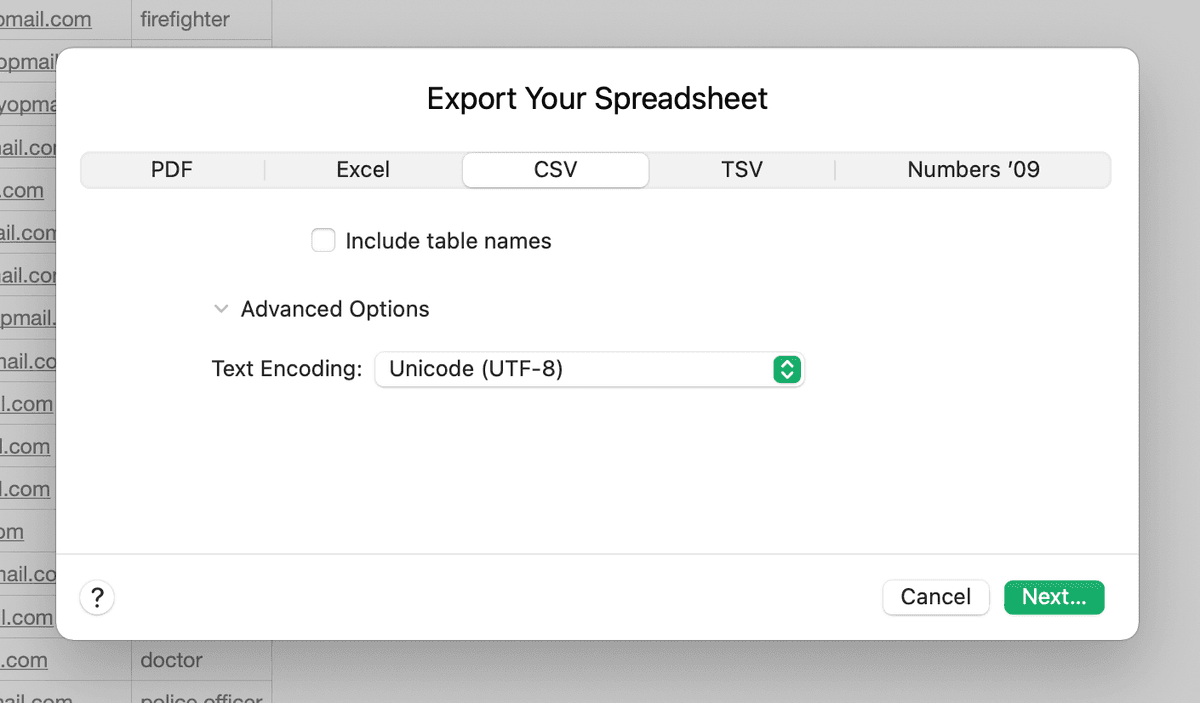
Click Export, choose the save location when prompted, and save the file. Open the resulting CSV to check that the first row contains the expected column names and that characters such as accents appear correctly. If the characters are wrong, export again with a suitable encoding in Advanced Options. The original Numbers document is not changed by the export.