To calculate a CSV column's sum, minimum, maximum, or average in Datablist, import the CSV and use Perform calculation on a number-type column. If the values were imported as text, change the property's type to Number before looking for these calculations. Text columns offer different calculations, such as word count and character count.
How to get the Sum, Min, Max, and Average values of a CSV column?
Begin by loading your CSV file in Datablist. If your table is still a Numbers document, export it as CSV first and check the exported numeric values. Anonymous users (without signup) can load files with up to 10,000 rows. For larger files, just sign up and create a free account.
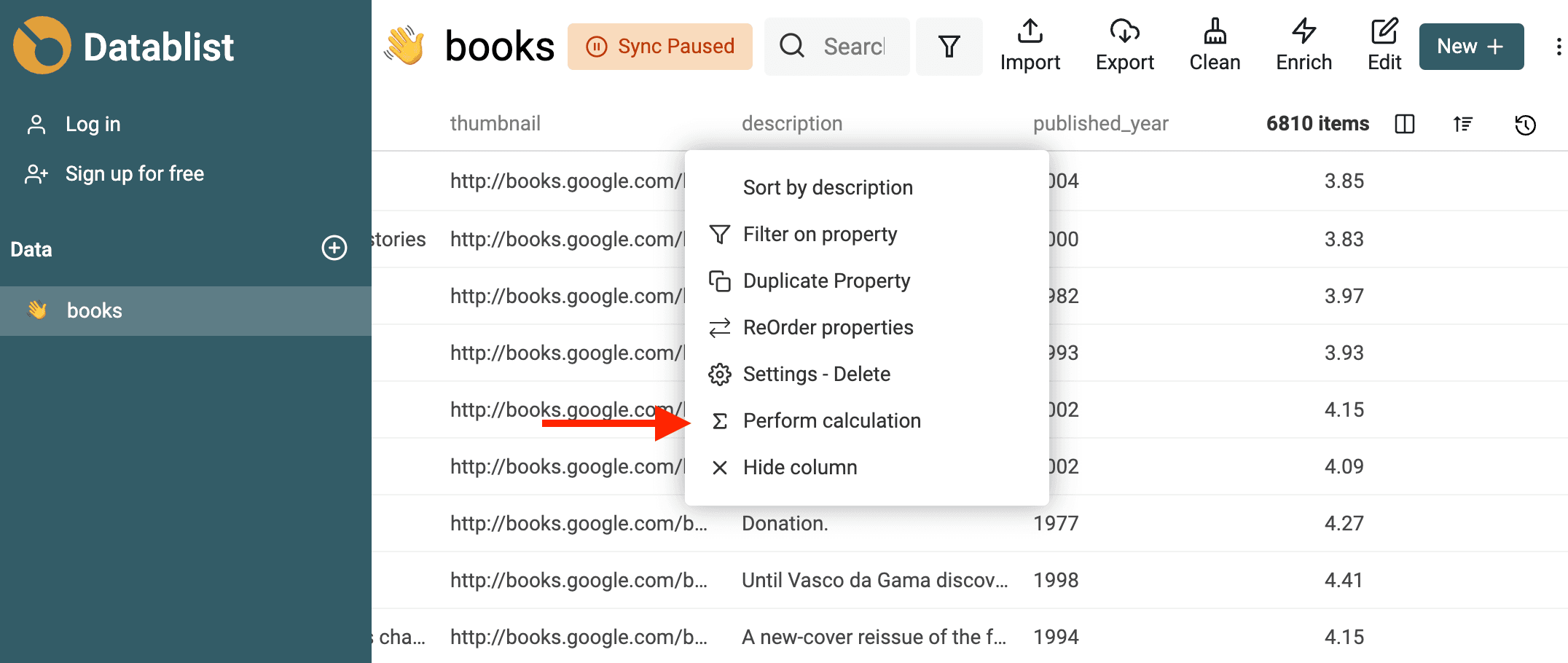
Open the menu on the numeric column you want to measure, then select Perform calculation. For example, a Revenue column with values 10, 20, and 30 has a sum of 60, a minimum of 10, a maximum of 30, and an average of 20.
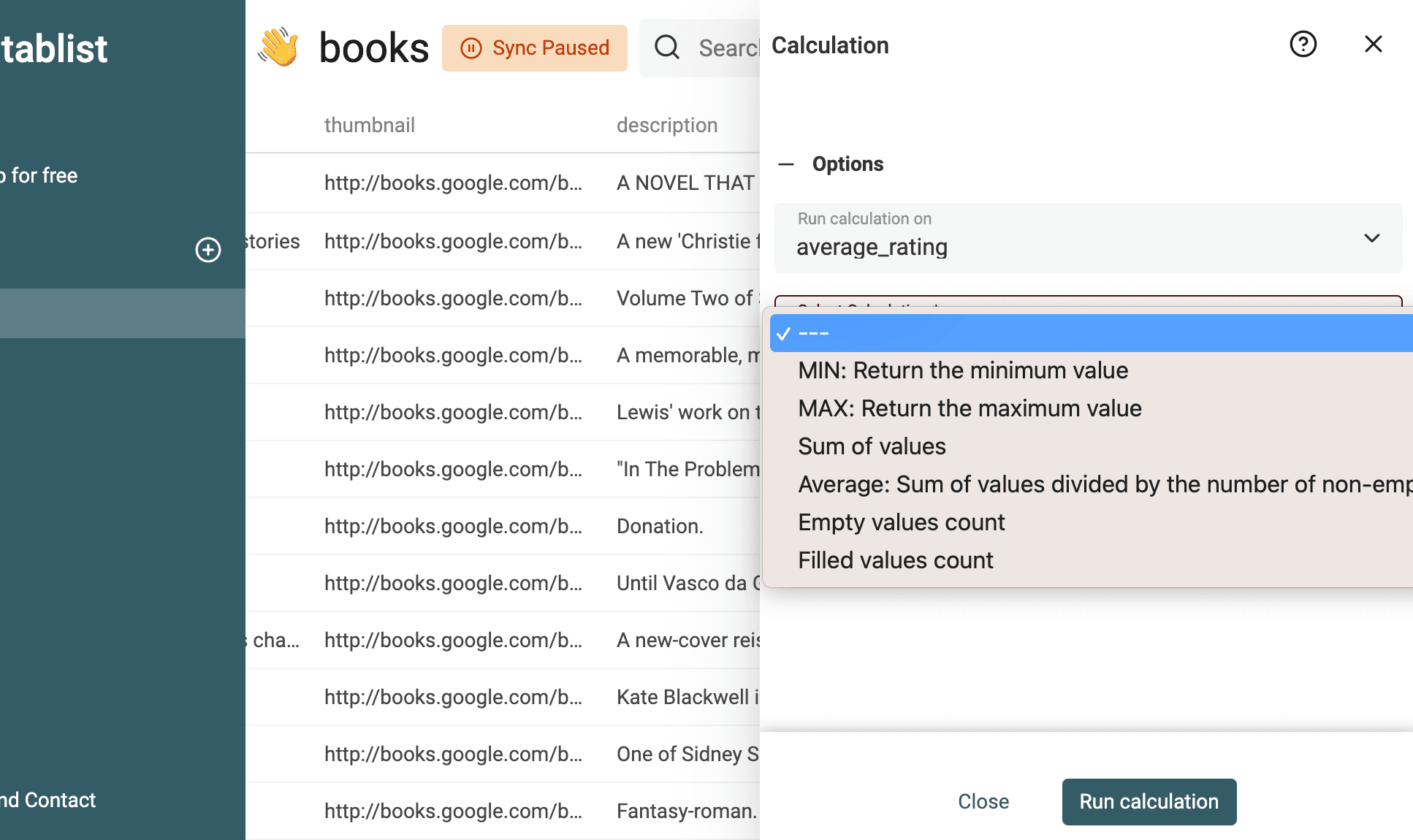
Choose Sum of values, MIN: Return the minimum value, MAX: Return the maximum value, or Average: Sum of values divided by the number of non-empty values. Check for empty cells before interpreting the average: it divides by populated values, not every row in the file.
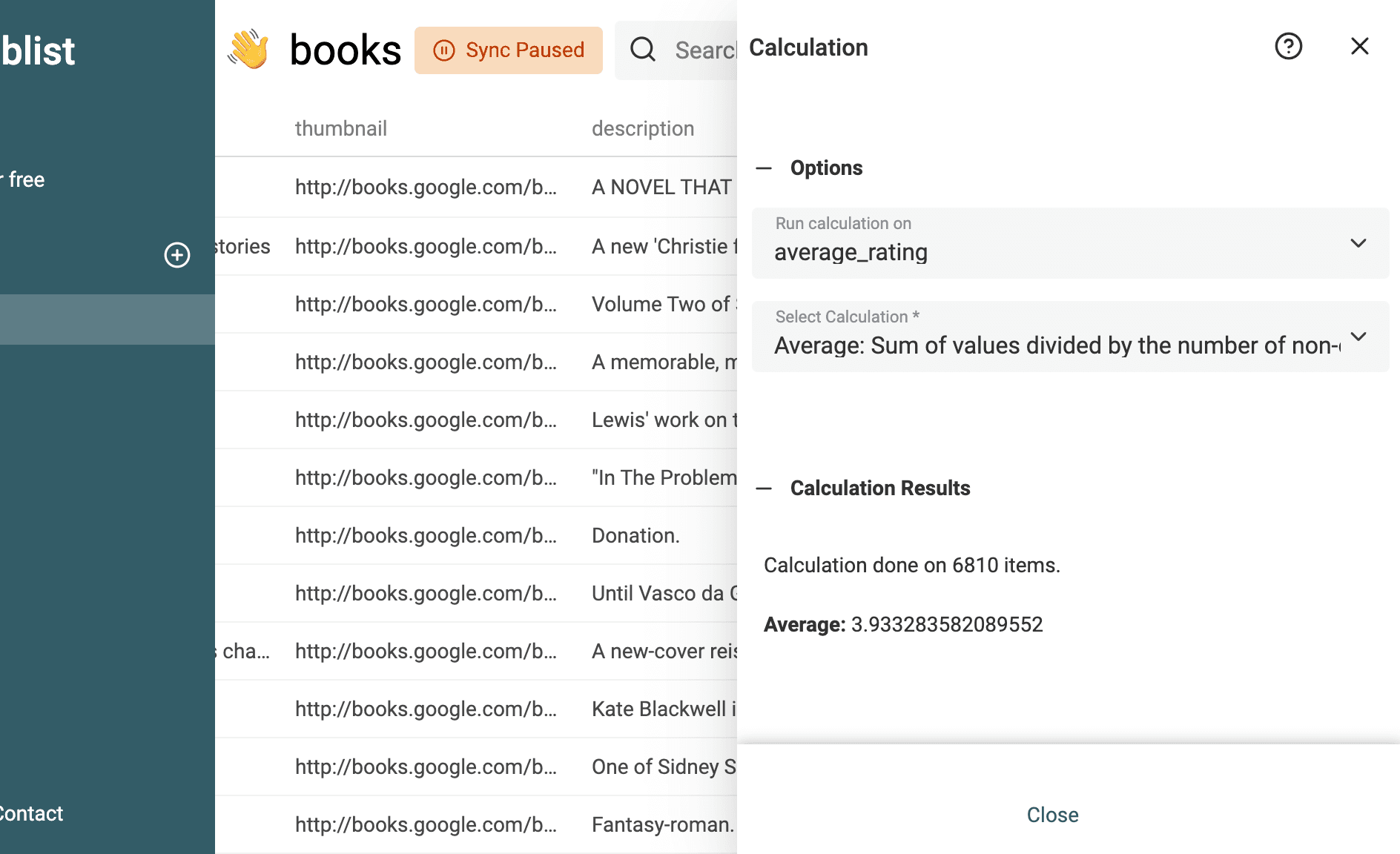
Review the result and the selected column. If the number looks wrong, check whether the imported values were recognized as numbers and whether blank cells were expected.
When to use Numeric Calculations on a CSV file?
- Traffic reports: Sum clicks in an exported report or find the highest value in a numeric column.
- Product catalogs: Check the minimum, maximum, or average price after importing a catalog CSV.