
Need to clean or enrich Pipedrive data? Datablist's Pipedrive Source imports CRM records into Datablist for data cleaning, bulk deduplication, enrichment, and analysis.
This guide walks you through connecting your Pipedrive account and importing People or Organizations into Datablist.
Step-by-Step Guide: How to Import Pipedrive Data
Datablist helps you clean, deduplicate, and enrich CRM data. Follow these steps to import data from your Pipedrive account.
1. Create a New Collection
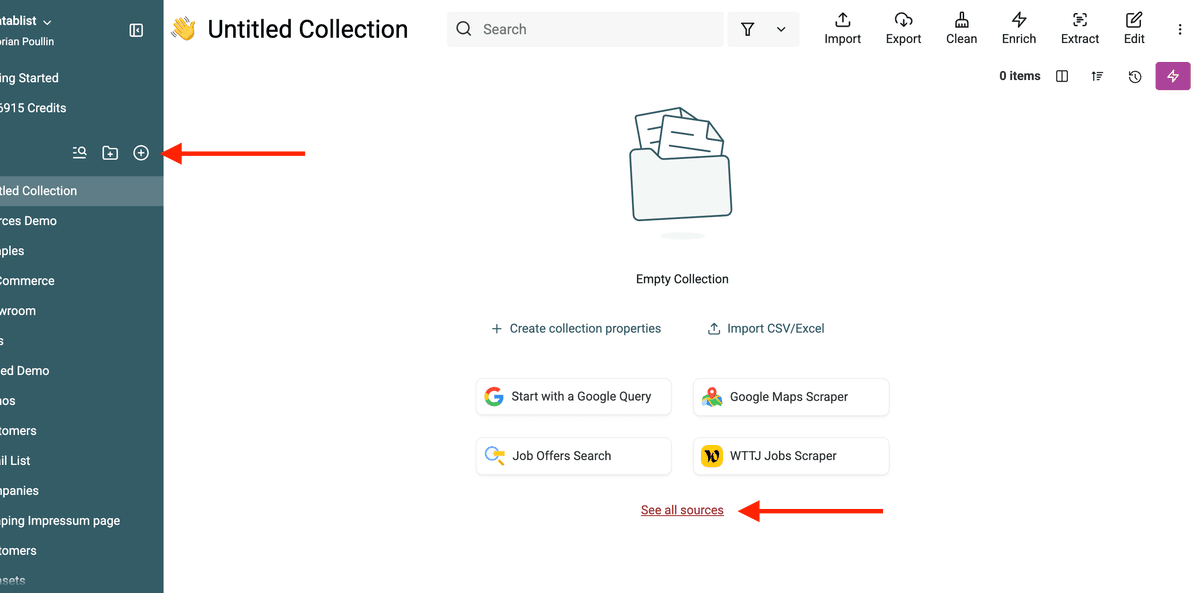
First, create a new collection in Datablist. This will be the workspace where your imported Pipedrive data will live. Then, open the Sources list.
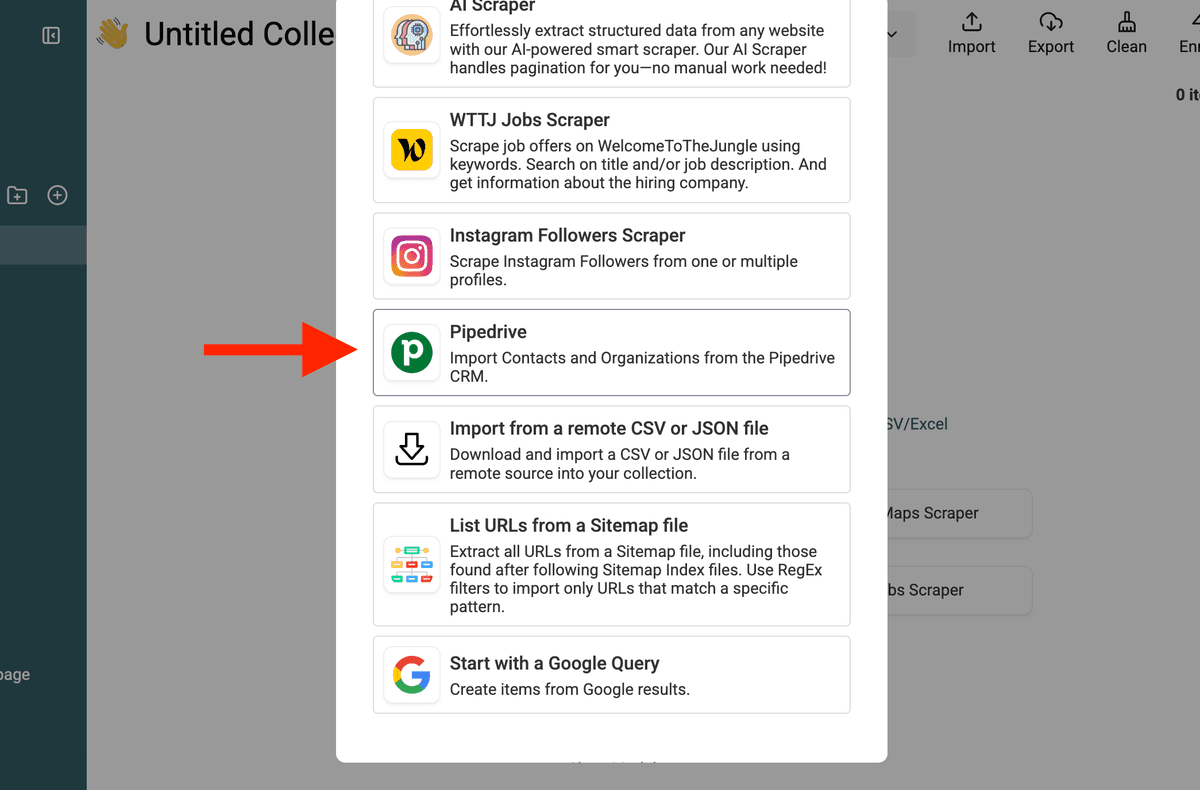
2. Select "Pipedrive" Source
Choose Pipedrive from the available data sources.
3. Enter Your Pipedrive API Key
Enter your Pipedrive API key to authorize the connection. Datablist uses the official Pipedrive API.
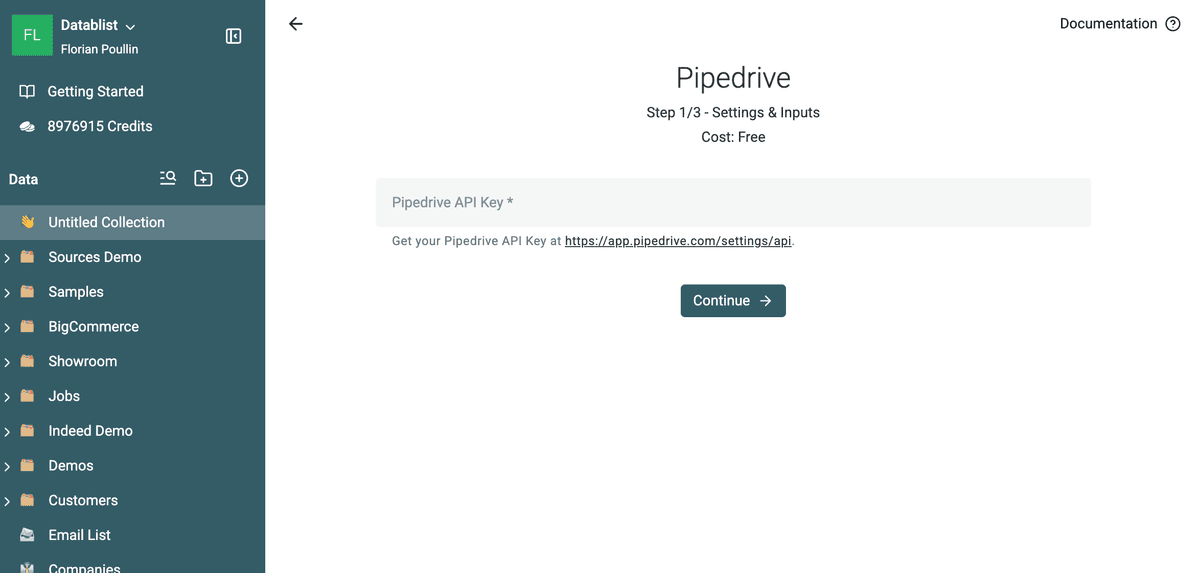
How to find your Pipedrive API Key: Log in to your Pipedrive account, go to Settings → Personal preferences → API, and copy your "Personal API token". Paste it into Datablist.
4. Choose the Pipedrive Object Type to Import
Select the type of data you want to import from Pipedrive:
- People: Your contacts.
- Organizations: Your company records.
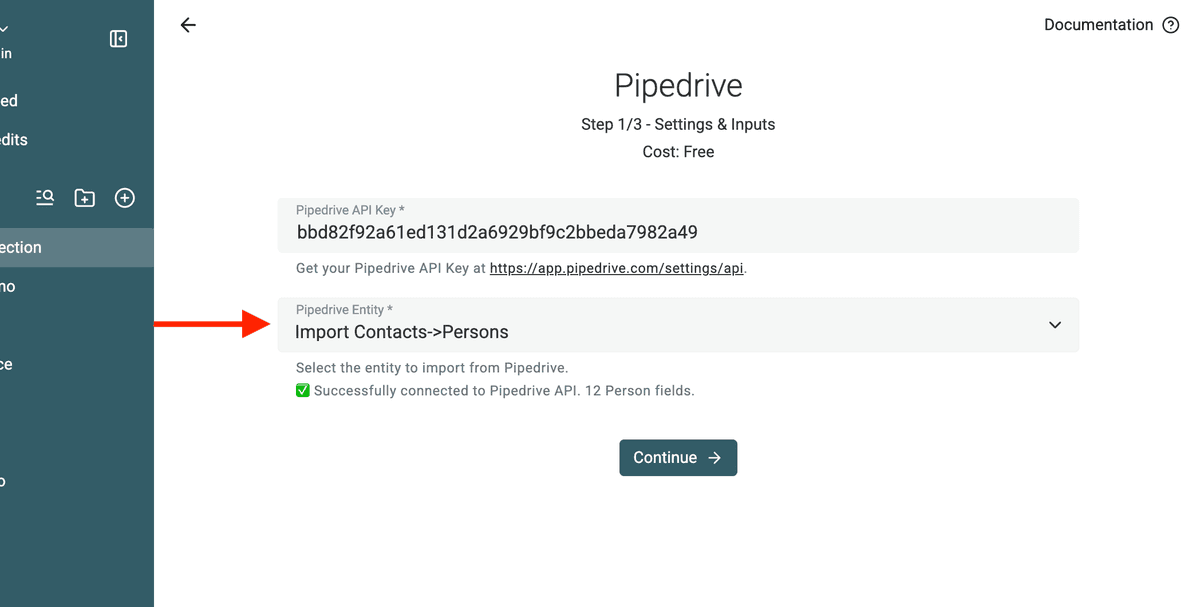
Important: If you plan to deduplicate or clean People and Organizations separately, it's best practice to import them into two separate Datablist collections.
5. Review Importable Data Fields
Before starting, Datablist shows the fields it will import from Pipedrive for the selected object type. This includes:
- Standard Pipedrive fields (e.g., Name, Email, Phone, Owner, Address, Value for Deals, etc.).
- All your custom fields.
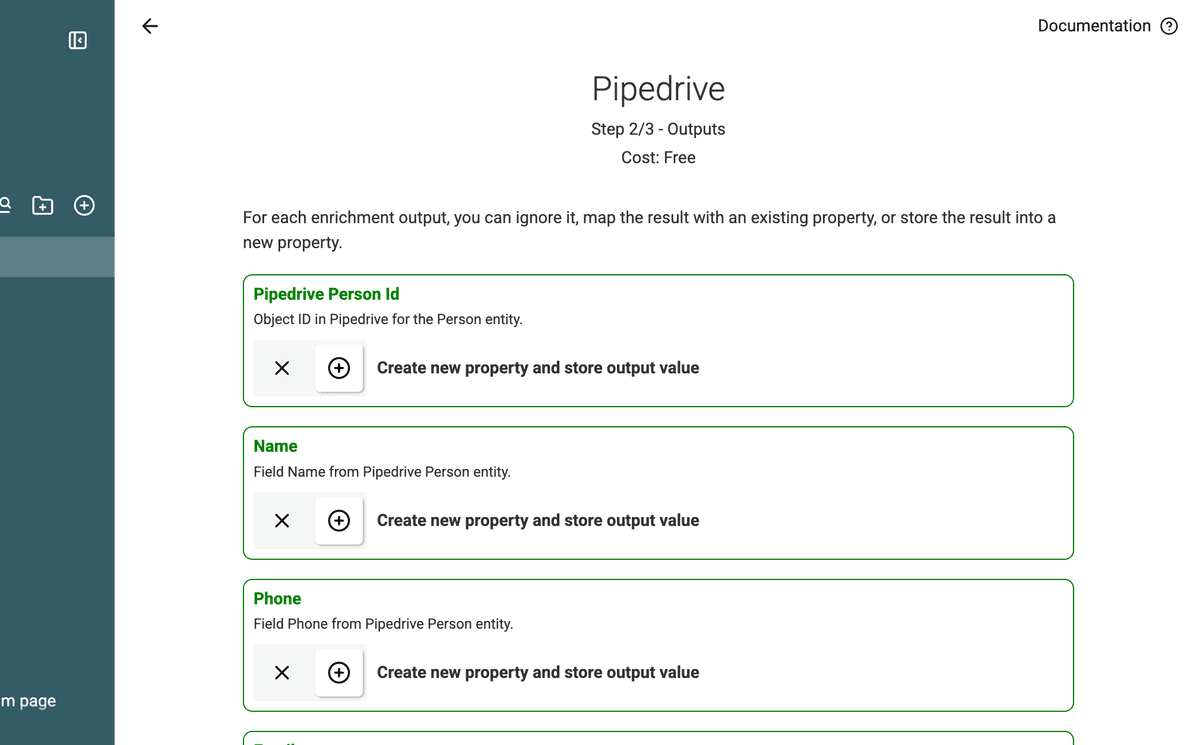
This screen confirms the data fields that will be pulled into your Datablist collection.
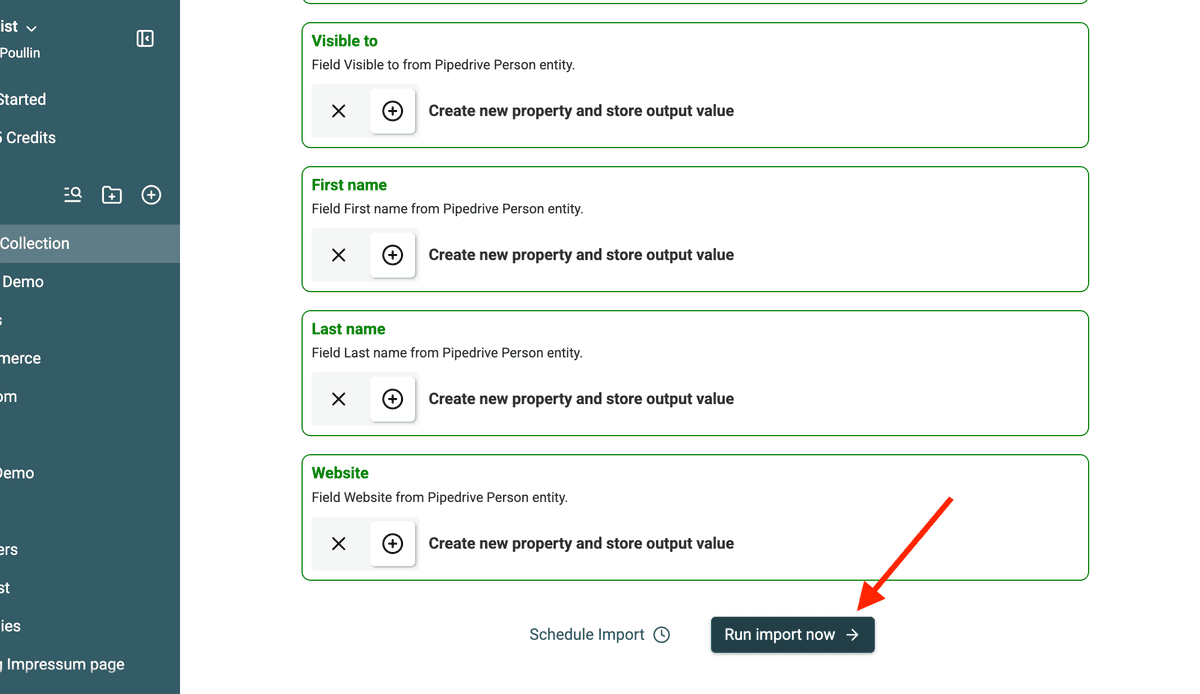
6. Start the Import
Click the Run import now button.
Datablist connects to your Pipedrive account and starts fetching the data. A notification shows the progress.
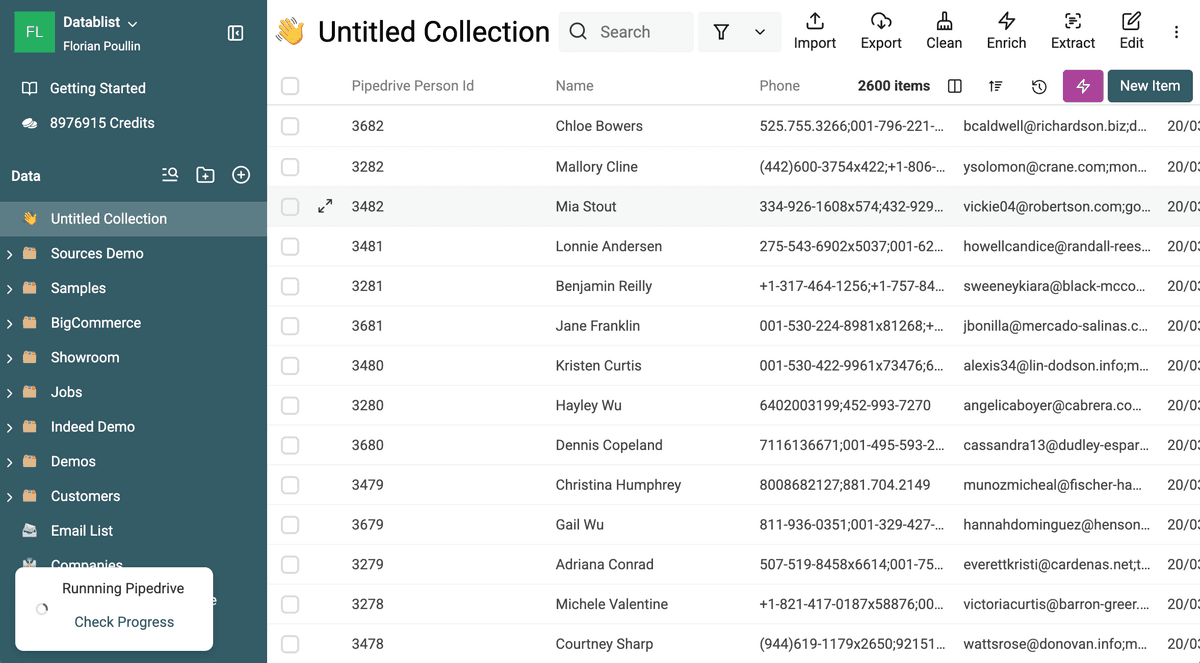
7. View the Imported Data
Once the import is complete, your Pipedrive data will appear in your Datablist collection, ready for cleaning, analysis, or enrichment.
Next Steps: Clean, Deduplicate, and Enrich Your CRM Data
Now that your Pipedrive data is in Datablist, you can use Datablist's advanced algorithms to deduplicate People and Organizations far beyond Pipedrive's built-in capabilities.
Best Pipedrive Import Workflows
Use this source when Pipedrive is the system of record but you need a workspace for cleanup, enrichment, or bulk review.
Good workflows include:
- Import Pipedrive People before email validation or deduplication
- Import Organizations before company enrichment
- Clean custom fields before a CRM migration
- Find duplicate contacts or companies outside Pipedrive
- Build an enriched CSV export for reporting or campaign prep
Import People and Organizations into separate Datablist collections when you plan to clean or deduplicate them separately.
CRM Cleanup Workflow After Import
For a full cleanup, import Pipedrive People and Organizations separately.
Start with People when you need to merge duplicate contacts, validate emails, normalize phone numbers, or prepare campaign lists. Start with Organizations when you need to merge duplicate companies, standardize company names, enrich domains, or clean industry and location fields.
After cleanup, export the reviewed data to CSV or Excel. Keep Pipedrive IDs in your collection so cleaned rows can be matched back to the right CRM records.
FAQ
Can I import Pipedrive contacts into Datablist?
Yes. Use the Pipedrive source, enter your API key, choose People, and import contacts into a Datablist collection.
Can I import Pipedrive organizations?
Yes. Choose Organizations as the object type. This imports company records and their available fields into Datablist.
Does Datablist import custom Pipedrive fields?
Yes. The page workflow shows Datablist reviewing standard fields and custom fields before the import starts.
What should I do after importing Pipedrive data?
Clean fields, deduplicate records, validate emails, enrich companies or contacts, and export the cleaned data for review or reimport.
Should I import Pipedrive People and Organizations separately?
Yes. Import them into separate collections when you plan to deduplicate, clean, or enrich them differently. Contacts and companies have different identifiers, fields, and cleanup rules.