
尽管 ChatGPT 是史上增长第二快的应用,截至 2025 年 2 月每周用户数已达到惊人的 4 亿,我仍然敢打赌:99% 的人并不会“真正会用”。
这里的“不会用”不是指不会打开网页,而是很多人不知道该怎么跟 AI 沟通,导致输出不准确、越用越挫败。
为了避免这些问题,下面我会手把手教你如何写出稳定可复用、准确率更高的 prompts。
本指南会覆盖以下内容:
- What is a Prompt?
- Examples of a Prompt
- Who This Guide Is For
- Why Good Prompts Matter
- How a Bad Prompt Looks Like
- Prompt Breakdown and Implementation Steps
Prompt 是什么?
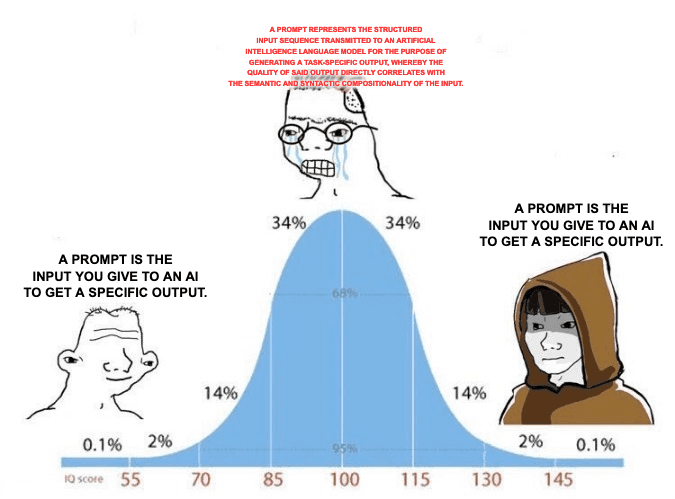
**简单说:**Prompt 就是你给 AI 的输入,用来换取你想要的输出。
如果你看过一些文章,可能会把“prompt 是什么”讲得很长很玄。但现实是:prompt 的定义一点都不复杂。
真正难的是写出“好用”的 prompt。开始教你怎么写之前,我先给你看 3 个 prompt 的例子。
这份指南适合谁?
写出有效的 prompt,迟早会成为你职业生涯里绕不开的一项能力。
所以这份指南不针对某个特定行业或岗位,而是面向所有需要处理数据与自动化(automation)的人——我们会把重点放在:如何写 prompts 来高效地 edit、analyze、clean 大规模数据集。无论你是学生还是资深从业者,都能直接用得上。
本文以及我们其他 prompts 的所有测试,均在 Datablist.com 上完成。
为什么好 Prompt 很重要?
你可以把 AI 当成一个“执行力超强、但完全没有主观能动性(agency)”的助理:你说得越清楚、越具体,它就越可能把事情做对。
一个糟糕的 Prompt 长什么样?
为什么这个 Prompt 很糟:
- **没有结构化指令:**要求散落在一大段话里,没有清晰的组织。
- **没有分段或分隔符:**AI 要从“文字墙”里自己做解析,没有逻辑断点。
- **占位符混在正文中:**把 {{company_about}} 和 {{Website Texts}} 随机夹在句子中间,会让 AI 更难正确替换与理解。
- **口语太随意:**像 “stuff”“btw” 这类表达会增加歧义。
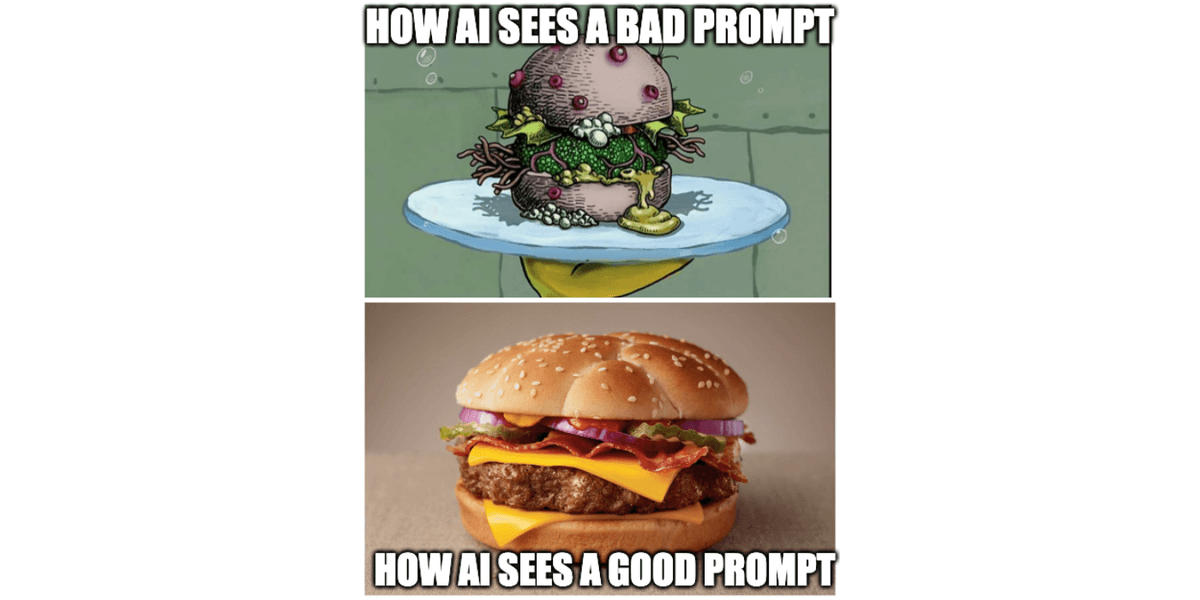
AI 会怎么看这个 Prompt
当这个 prompt 真正和数据一起使用时,在 AI 眼里会变成这样:
当这些 placeholders 被真实数据替换 后,就会变成一团糟,AI 很难正确理解与处理。
这个案例里主要会出问题的地方:
- **混淆与占位符问题:**占位符被替换后,AI 很难把两段不同来源的数据区分开。
- **标准难以判读:**AI 很难准确把握“HR 公司”的判定条件。
👉 说到这里:我们来拆解一个好 prompt 应该长什么样,以及如何一步步写出来。
3 个 Prompt 示例
单一句命令 Prompt
最简单的 prompt 形式,就是一句命令:
“Create me an essay about the Renaissance"
提问式 Prompt
prompt 也可以只是一个问题:
"Are roses red?"
Tagged Prompt(最推荐的 Prompt 写法)
更常见、更实用的 prompt,是一套更详细的指令:它可以帮你 edit、analyze、clean 数据,用于个性化 cold emails、分析客户反馈、清洗 company names 等等。
我把这种写法称为 tagged prompt:因为它把每个段落都用一个 tag 标出来,告诉 AI 这段内容的作用是什么;否则 AI 往往会自己“猜”每段的含义。
Context: I will give you know a record with account data including the account's LinkedIn description and the website texts of companies where we aren't sure in which niche/industry there in.
=====
What I want you to do: Evaluate if this company fits in our targeting based on what they offer as a service/product.=====
How to do it: I'll provide you with the LinkedIn company description or website texts or both, you have then to read this text and check if the context indicates they fit in the description I am going to give you.
=====
Important mention about the task: Always check for context rather than for isolated keywords.
=====
Here’s a description of the companies we’re looking for: B2B companies that help other companies with HR services such as recruitment, HR consulting, skilled workforce acquisition, employer branding, personnel growth, executive searches, payroll, HR software, and outplacements.
=====
Important mention about the data: Many companies might have some keywords in their descriptions that could suggest they operate in the B2B personnel sector but they actually do something different, so you must always evaluate in context, meaning that not every company that mentions "employees" or "teams" is a match.
=====
How to start: Read the first description then the second one and make your decision afterward.
=====
Here is the first company description: {{company_about}}
=====
Here is the second description: {{Website Texts}}
先别急着说“这也太长了,不实用”。
我下面会把它拆开讲清楚。
Prompt 拆解与落地步骤
好 Prompt 的结构拆解(通用模板)
当你查看 Datablist.com AI-prompts library 里的 AI prompts 模板时,你会发现几乎每个 prompt 都由多个 section 组成,并且每个 section 基本都有这 3 个组件:
- **Tag:**告诉 AI 这一段在讲什么
- **Body:**正文内容,用来指导 AI 完成任务,通常包含:
- Explanation:给 AI 背景信息/让它知道应该了解什么
- Command:给 AI 任务/让它做什么
- **Separators (===):**我们用分隔符主要是为了两件事:
- 视觉分隔:让 prompt 更好读、更好改(对人类非常友好)
- AI parsing:帮助 AI 更准确地识别每段的边界,从而输出更稳定
最后还有:Placeholder properties(占位符字段):
- 在 prompt 被使用时,会用数据替换这些列
- 用于在 dataset 的每条记录上“个性化”执行同一套 prompt
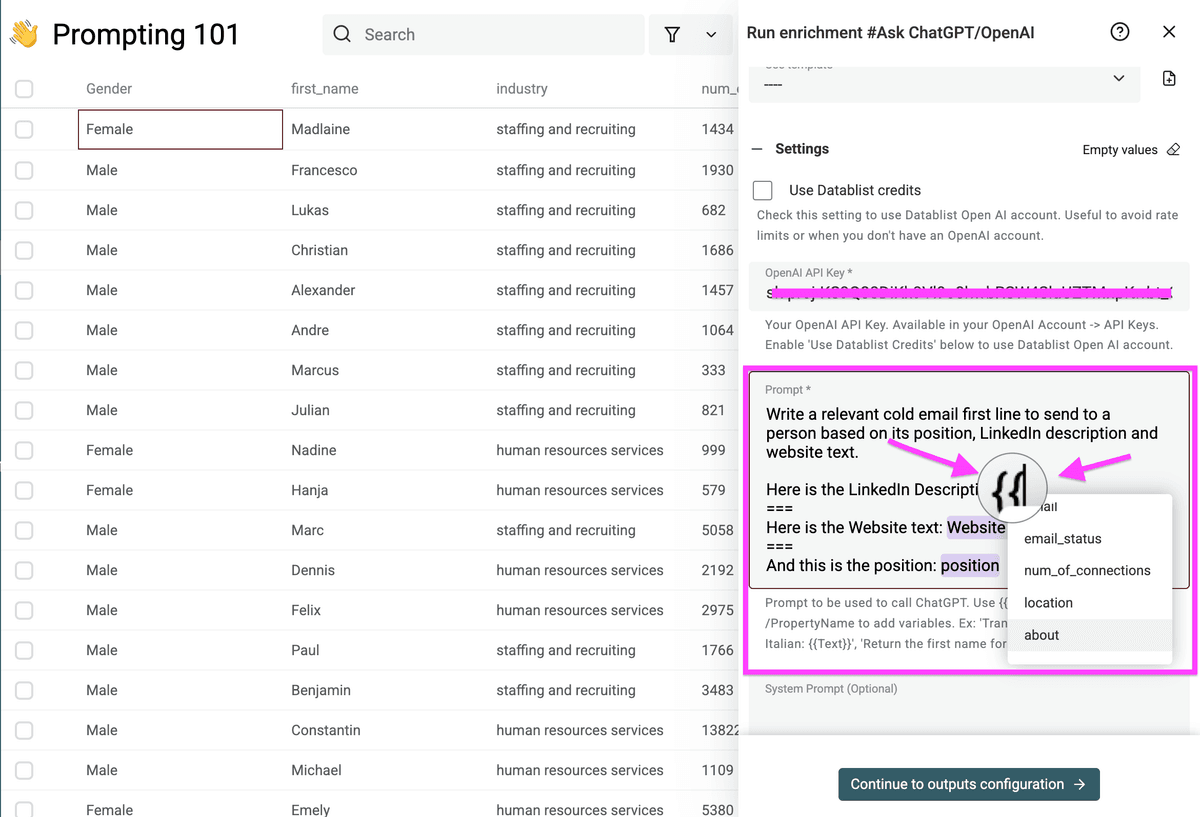
比如在我们的 Job Title Categorizer prompt 里,我们用 {{job_title}} 作为占位符。处理每条记录时,系统会用数据集里的真实 job title 自动替换它。
我的 Prompt 拆解与落地步骤
注:HR 公司并不是我们的 ICP(“Ideal Customer Profile”),这里只是举例方便你理解。
第一步:Context(背景)
在给 AI 提供背景时,我做了 3 件关键的事:
- 先说明 AI 将会收到哪些数据,但不提前暴露具体筛选标准
- 这样可以减少 AI 带着倾向性去判断
- 解释数据背后的场景与问题
- 让 AI 明白它在处理什么
- 描述我自己的具体需求
- 让 AI 能用更贴合的方式解决
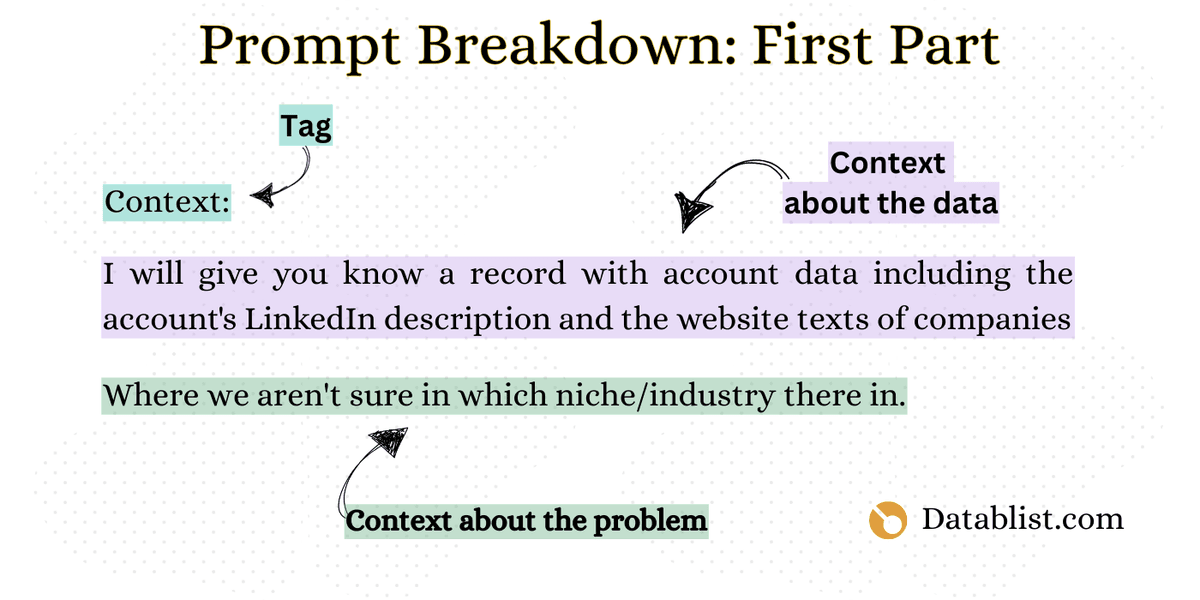
你写 prompt 时需要做什么:
- 告诉 AI 你要给它什么数据
- 描述你的问题
- 使用分隔符(===)
第二步:Task/Command(What I Want You To Do)
在这一段里,我做了两件很关键的事:
- 用 tag “What I want you to do” 再次给 AI 定位,让它知道这一段的主题
- 只给“任务的大方向”,不在这里展开步骤,也不指定去看哪些数据字段,保证信息流更顺
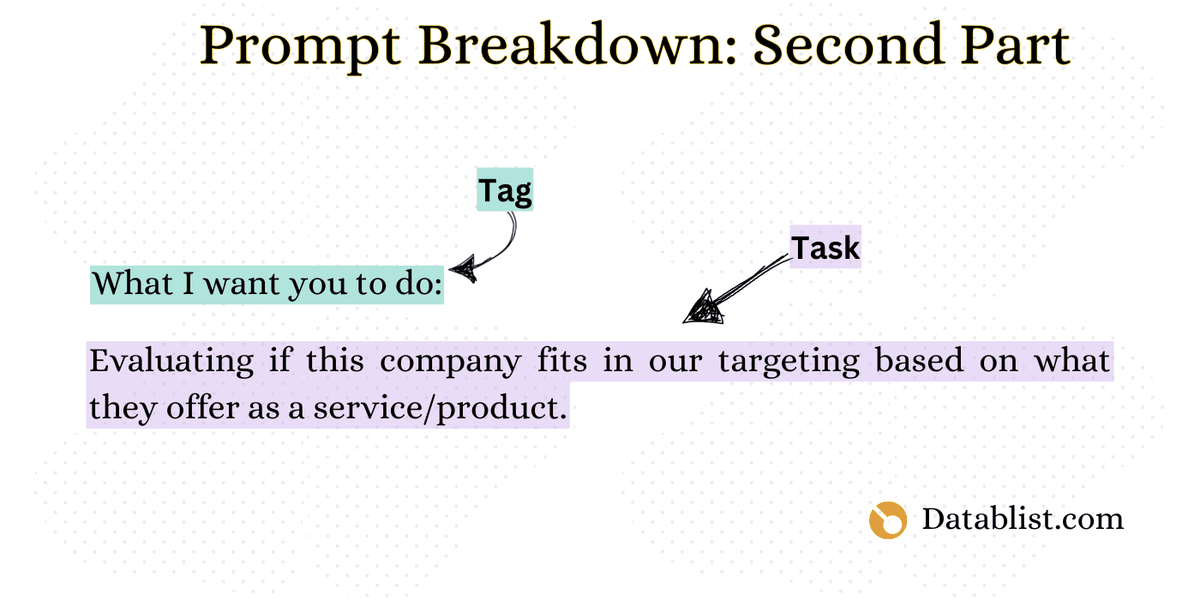
你写 prompt 时需要做什么:
- 先明确你这次任务的核心目的(core purpose)
- 使用分隔符(===)
如果你有很多类似任务,不要妄图一个 prompt 全包。任务堆在一起不仅 AI 难处理,你也更难发现输出里的错误。
第三步:How To Do It(指令步骤)
我在写“怎么做”这部分指令时,会遵循这些原则:
- 尽量简单直接
- 像教人手工操作一样去解释
- 强调清晰、可执行的 step-by-step
记住:AI 最擅长的就是按流程重复执行。你拿不到想要的结果,通常是因为 指令不够清晰或不够具体,而不是 AI “不会”。
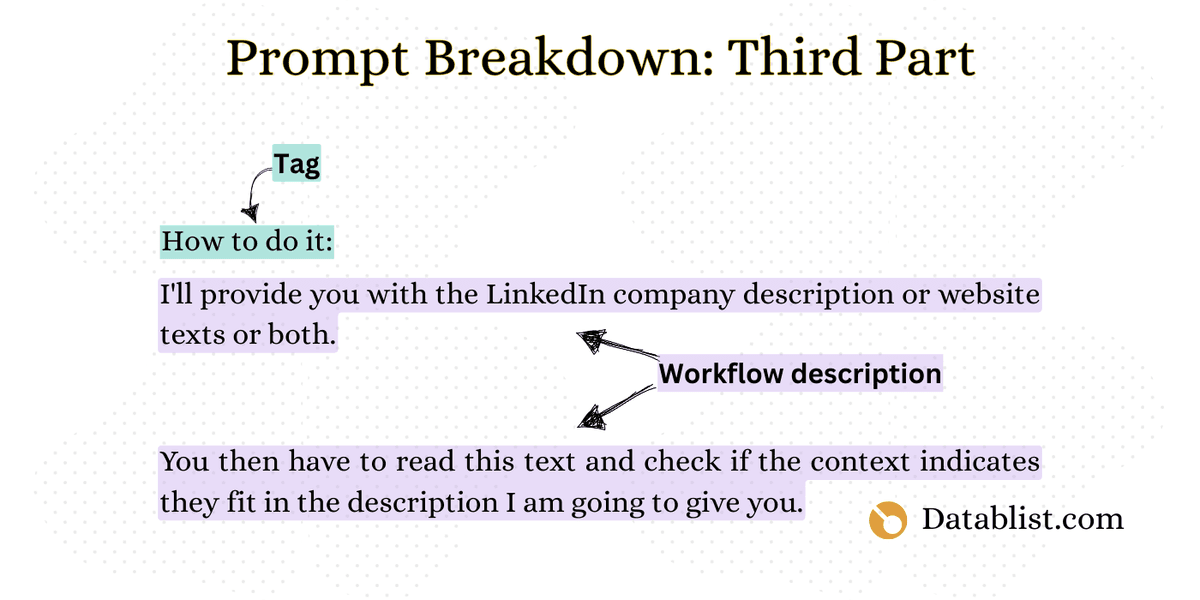
你写 prompt 时需要做什么:
- 用简单明确的语言写出分步骤的操作
- 使用分隔符(===)
第四步:防错机制 1(Task 的上下文)- 可选
这一步是补充“任务层面的额外背景”,帮助 AI:
- 理解细微差别(nuances)
- 避开常见坑
- 做出更靠谱的判断
把潜在问题和边界情况讲清楚,相当于给 AI 加了 guardrails,避免它自作主张或过度推断。
不是每个 prompt 都必须有这一步,但对于复杂任务很关键。
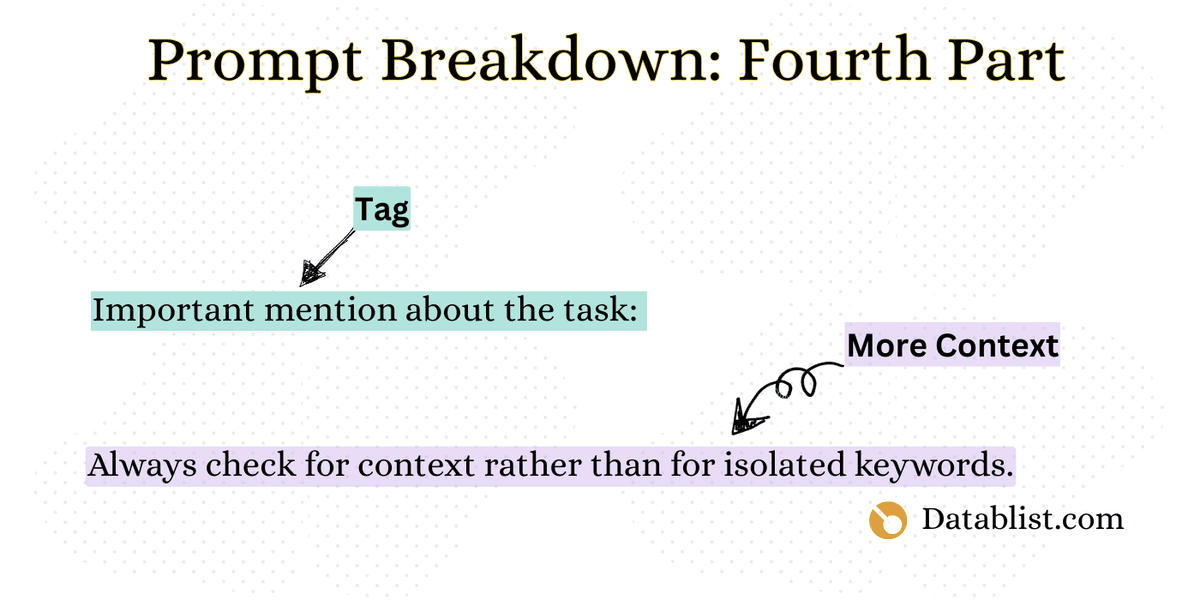
你写 prompt 时需要做什么:
- 想想初级同事做这类任务最容易犯哪些错
- 把这些坑写进 prompt,让 AI 主动规避
- 使用分隔符(===)
第五步:Goal(你要的结果长什么样)
写“期望结果”时,最重要的是:
- 提供足够具体的目标上下文
- 明确你期待的输出是什么
- 避免把“你希望它得出的结论”写得太直白,以免影响分析客观性
通常用自然、接近口语的表达,比堆很多术语更容易得到好结果。
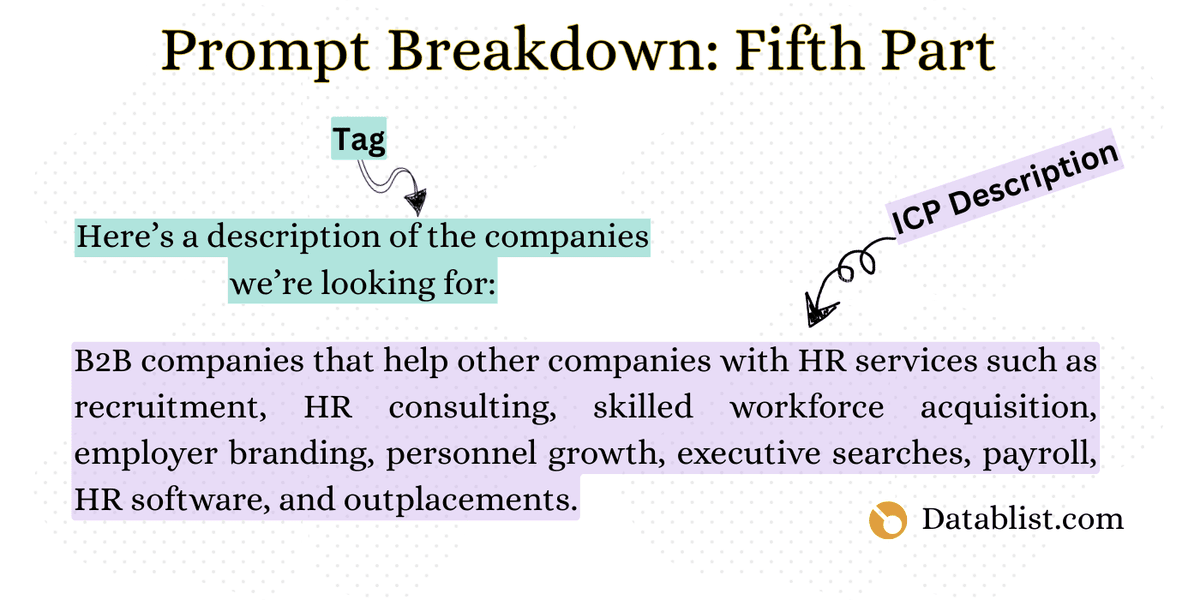
你写 prompt 时需要做什么:
- 定义你希望 AI 从分析/任务中达成的清晰结果
- 说清楚哪些信号(signals)最重要
- 给例子
- 使用分隔符(===)
第六步:Data Context(数据层面的提醒)- 可选
当我在 prompt 里加入数据背景(data context)时,通常会这么做:
- 用明确规则强化防错,并解释原因
- 规则示例:“Always evaluate complete context”
- 原因:“Single indicators can be misleading”
- 增加多层提示
- 要避免的潜在错误
- 数据本身可能存在的问题
- 任务级别的提醒
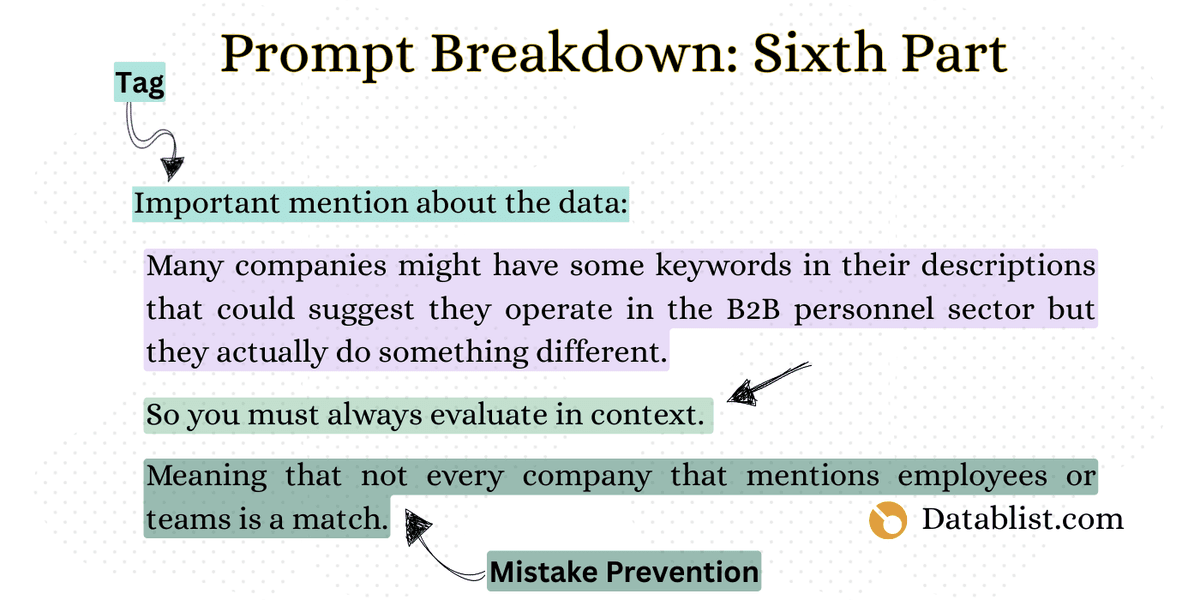
你写 prompt 时需要做什么:
- 想想 AI 可能会犯哪些具体错误,并明确写出来让它避开
- 把信息拆成逻辑清晰的段落,而不是一股脑塞进去
- 使用分隔符(===)
📘 Quick Fact
与其让 AI 自己猜,不如把规则讲明白。你会因此少掉很多低级错误。
第七步:How to Start(从哪里开始做)
最后一步,是告诉 AI “从哪一步开始”。我这里的做法是:
- 依然保持简单直接
- 按时间顺序编号
- 用明确动词,比如 “read, make, decide…”

你写 prompt 时需要做什么:
- 用编号给出清晰的开始步骤
- 使用动词让步骤更易执行
- 保持指令简洁
- 使用分隔符(===)
第八步:Placeholder 格式(永远放最后)
**这是写 prompt 的最后一步:**把表格列(columns)以 placeholder 的形式插入。
**这一段必须放在最后,**因为如果你把数据 placeholders 提前放进 prompt,往往会影响 AI 的理解顺序,导致结果跑偏。
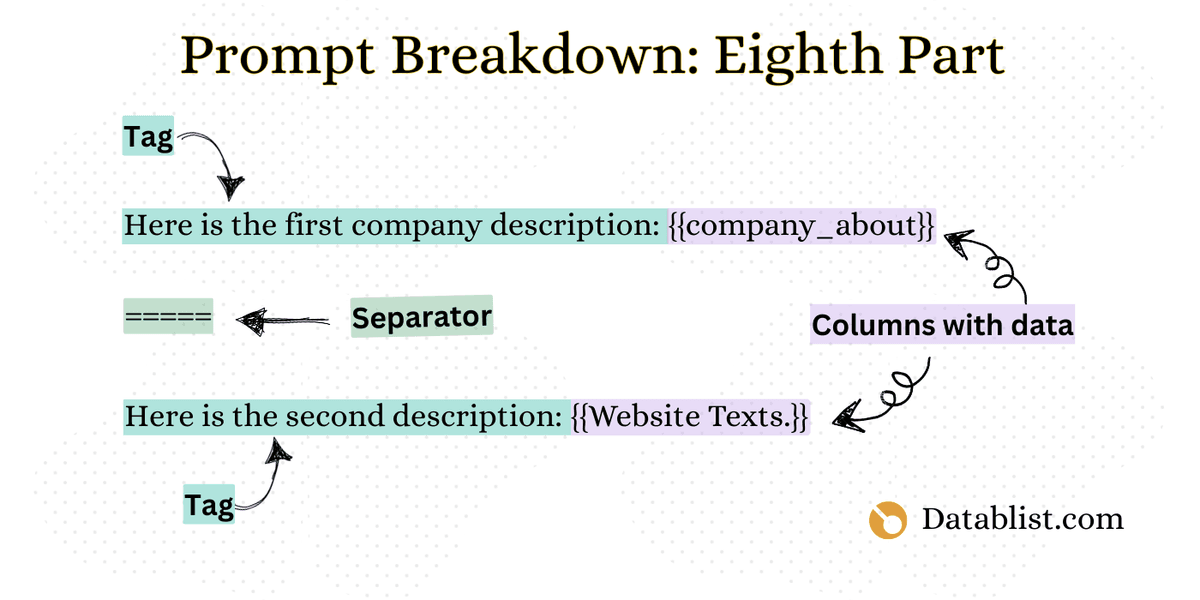
你需要做什么:
使用双大括号 {{ }} 来引用你 spreadsheet 里的列数据
使用分隔符(===)

❗Important
所有 placeholders 都应该放在 prompt 的末尾,以确保输出更稳定、更准确。
把这些规则应用到另一个例子
前几天,我收到一封来自一家 M&A firm 的邮件,刚好非常适合拿来做示例。
这是他们的需求:
现在开始写 prompt!
Step One
这一步,我们给 AI 一个总体背景。
====
Step Two
这里我们明确告诉 AI 本次的核心目标。
====
Step Three
这一步,把 AI 需要执行的分析步骤拆清楚。
- First, read through the complete record, including all available data fields (financial reports, executive info, tech stack).
- Create a structured format of the data.
- Identify records with data quality issues or inconsistencies and flag them.
- Score companies based on the given criteria.
=====
Step Four
为了提高准确率,这里我们补充潜在误区和关键注意点。
- Some financial metrics may appear similar but have different calculations across industries
- Company distress signals need to be evaluated in the context of the industry and market conditions
=====
Step Five
这里定义“什么叫成功”:明确评估口径与标准。
- Here's an example of how to present the scoring criteria clearly:
Scoring Model Structure: Each company will receive a score based on 4 key criteria. We'll assign points for meeting each criterion, with those meeting 3 or more criteria getting priority status.
Key Criteria (1 point each):
- Financial Health Score
- Technology Alignment Score
- Leadership Stability Score
- Market Position Score
=====
Step Six
补充行业与数据解读方面的关键背景。
Reason: Financial metrics only make sense when compared within the same industry context
Example: A SaaS company with $5M revenue at a 10x multiple ($50M valuation) could be worth more than a retail company with $30M revenue at 1.5x multiple ($45M valuation)
=====
Step Seven
告诉 AI 开始执行时的动作顺序。
- Read through each record and verify all required data fields are present
- Create a structured format for the data, organizing it into clear categories
- Flag any records with data quality issues or inconsistencies
- Apply the scoring criteria to evaluate and rank companies =====
Step Eight
最后,把 AI 需要处理的数据 fields 用 placeholders 提供出来。
This is the Company Name: {{Company Name}}
====
This is the Industry: {{Industy}}
====
This is the Revenue of the last 12 months: {{Rev. 2024}}
====
This is the Growth Rate YoY: {{Growth Rate}}
====
This is the Technology Stack: {{Tech Stack}}
====
This is the Executive Team Size: {{Execs.}}
=====
完成。你会发现这个模板几乎适用于任何任务类型。
结论
在今天的工作环境里,会写好 prompt 已经是必备技能。无论你用的是 ChatGPT、Claude、DeepSeek 还是其他 AI model,想拿到更准确、更相关、更有用的输出,关键都在 prompt。
按照本指南的原则去写,你就能更有效地用 AI 处理数据、提升自动化效率,并显著拉高整体生产力。
AI Prompt 写作常见问题 FAQ
什么是一个好的 AI prompt?
一个好的 AI prompt 应该清晰、具体、结构化。它通常包含:你想达成的目标背景(context)、明确的执行指令(instructions)、以及你希望输出的格式(output format)。语言越简单直接越好,避免歧义。
Check our AI prompts examples for lead generation.
为什么我的 ChatGPT prompts 不好用?
常见原因包括:
- 指令不清晰或太笼统
- 一个 prompt 里塞了太多任务
- 缺少背景信息或上下文
- 语言过于复杂或太技术化
- 没有给出明确示例或输出格式
怎么写 AI prompts 才能得到更好的结果?
想让 prompts 更有效,可以遵循这些做法:
- 先写清楚你的目标
- 把复杂任务拆成更小的步骤
- 提供必要的背景与上下文
- 明确输出格式
- 使用简单、直接的语言
- 尽量给示例
prompt 写作最常见的错误有哪些?
最常见的错误包括:
- 太泛、太抽象
- 在一个 prompt 里堆多个任务
- 背景信息不足
- 用词不清晰或容易引发歧义
- 以为 AI 能读懂“言外之意”
- 没有指定想要的输出格式
AI prompt 应该写多长?
prompt 需要“刚好够用”:信息要完整,但不要冗长。简单任务通常几句话到一段就够;复杂任务可能需要更详细的步骤和背景。关键是:全面但简洁。
什么是 prompt engineering?
prompt engineering 指的是:通过设计与优化你给 AI 的输入(prompt),来获得更准确、更有价值的输出。它包含理解 AI 如何解读指令、如何结构化 prompt、以及根据结果持续迭代优化。