This prompt helps you verify if a prospect is still working at their company by comparing their email domain with the company's URL (works the same with a simple domain). It's a quick and reliable way to keep your contact database clean and ensure you're reaching out to the right people. The template provides a straightforward yes/no output, making it easy to process multiple contacts efficiently while maintaining high accuracy in your verification process. Perfect for sales teams and recruiters who need to validate contact information before important outreach campaigns or when refreshing their database.
How to use this prompt on a CSV file?
Datablist allows you to take an entire CSV file and run prompts directly on every line.
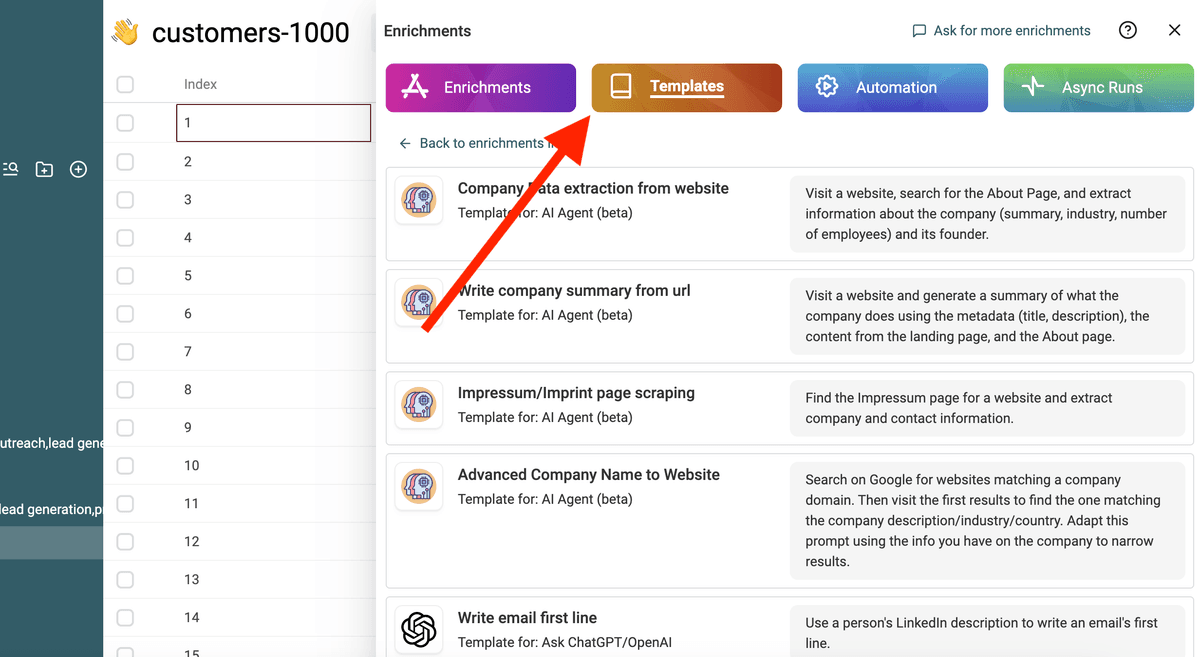
The great news is that the prompt you need is already available in Datablist under the "Templates" section. No need to start from scratch! Simply select the template that fits your task, and it's ready to run on every line of your CSV. This makes it even easier to transform your data with just a few clicks.
Import your CSV file in Datablist. Then select "Enrich" from the header.
Select the template: Check if a prospect is still working at a company
Replace the variables from the prompt with your collection's properties using / or '{{'.
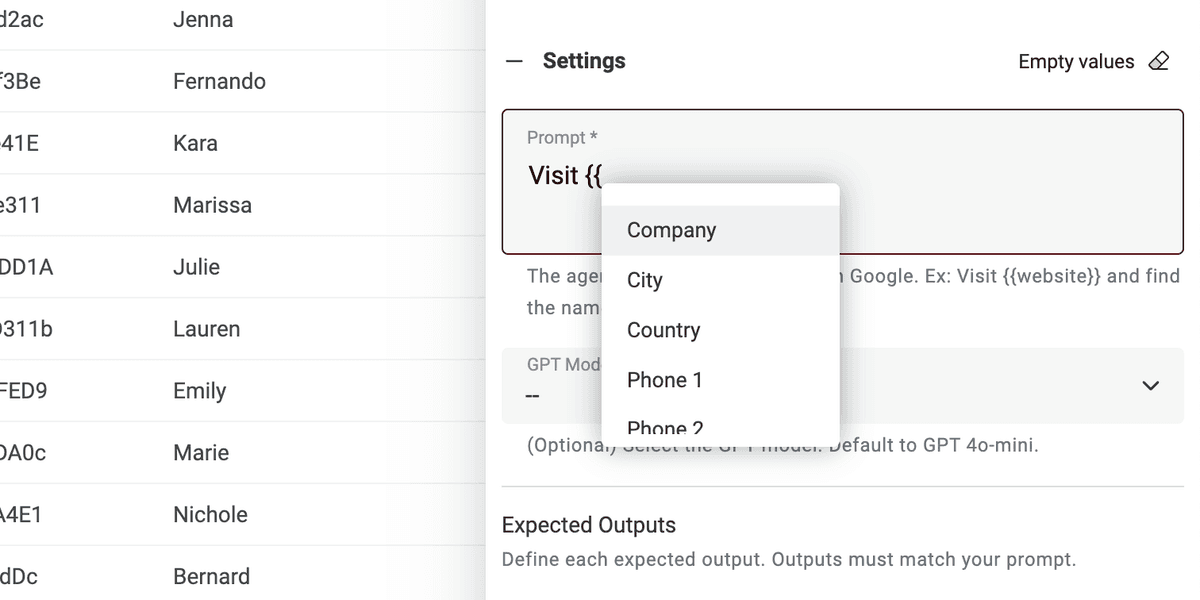
If you don't have all the variables, just edit the prompt.
That's it! You can now run the prompt on every line of your CSV file and get the results in a new column. 🚀
How much does it cost?
You've got two options. Both are super simple.
Option 1 – Use your own OpenAI API key.
Totally free on our side. Just plug in your key, and Datablist will send requests through your account. You pay OpenAI directly, based on their usage rates. No middleman. No extra fees.
With your API key, for on 1,000 items, you might pay OpenAI around $2.
This is perfect if you already have an OpenAI key or want full control over costs. Bonus: no rate limits from us!
Option 2 – Use Datablist Credits.
No API key? No problem. You can use Datablist's built-in ChatGPT account. We handle the API stuff for you. You just pay with Datablist credits.
- API key setup – skipped
- ChatGPT rate limits – avoided
- Account restrictions – not your problem
It just works.
TL;DR
- Use your key = cheaper
- Use Datablist credits = easier
Either way, you're in control.