
I know this feeling of uncertainty when no one is replying to your cold emails.
I started cold emailing CEOs of mid-size car shops in 2024 and got no responses, literally zero.
So here I am, I needed clients, and I needed them fast (I was running out of money).
Here's what I did: I converted my old agency to an AI consultation & cold email agency and went into a deep rabbit hole to start learning everything about cold email while doing it for others.
This article covers 12 of the most common reasons why prospects don't reply to your cold emails, from the perspective of someone who ran a cold email agency and sent tens of thousands of cold emails, both successfully and unsuccessfully.
The checklist helps you diagnose the problem before sending another batch. No individual change guarantees replies.
Why are my cold emails getting no response?
Start by separating delivery from relevance. If messages bounce or your sending domain fails authentication checks, fix that before rewriting the copy. After checking delivery, review the audience, the reason you contacted each person, the clarity of your offer, and whether your ask is easy to answer. Finally, check whether you sent a useful follow-up to people who did not respond.
A platform's Delivered status can mean that the receiving server accepted the email, while the message still lands in Spam or a security quarantine. SendGrid explains this distinction. Send a test to someone who has agreed to help and ask them to check those folders before treating silence as a message-copy problem.
For a quick test, take ten recent emails and mark each one against those four checks. Rewrite one variable at a time—such as the opening line or the audience segment—so you can tell what changed.
Things to Improve When Your Cold Emails Don’t Work
When you send cold emails and don't get a reply, you could have 99+ things to work on — but is it worth it to work on all of them? No.
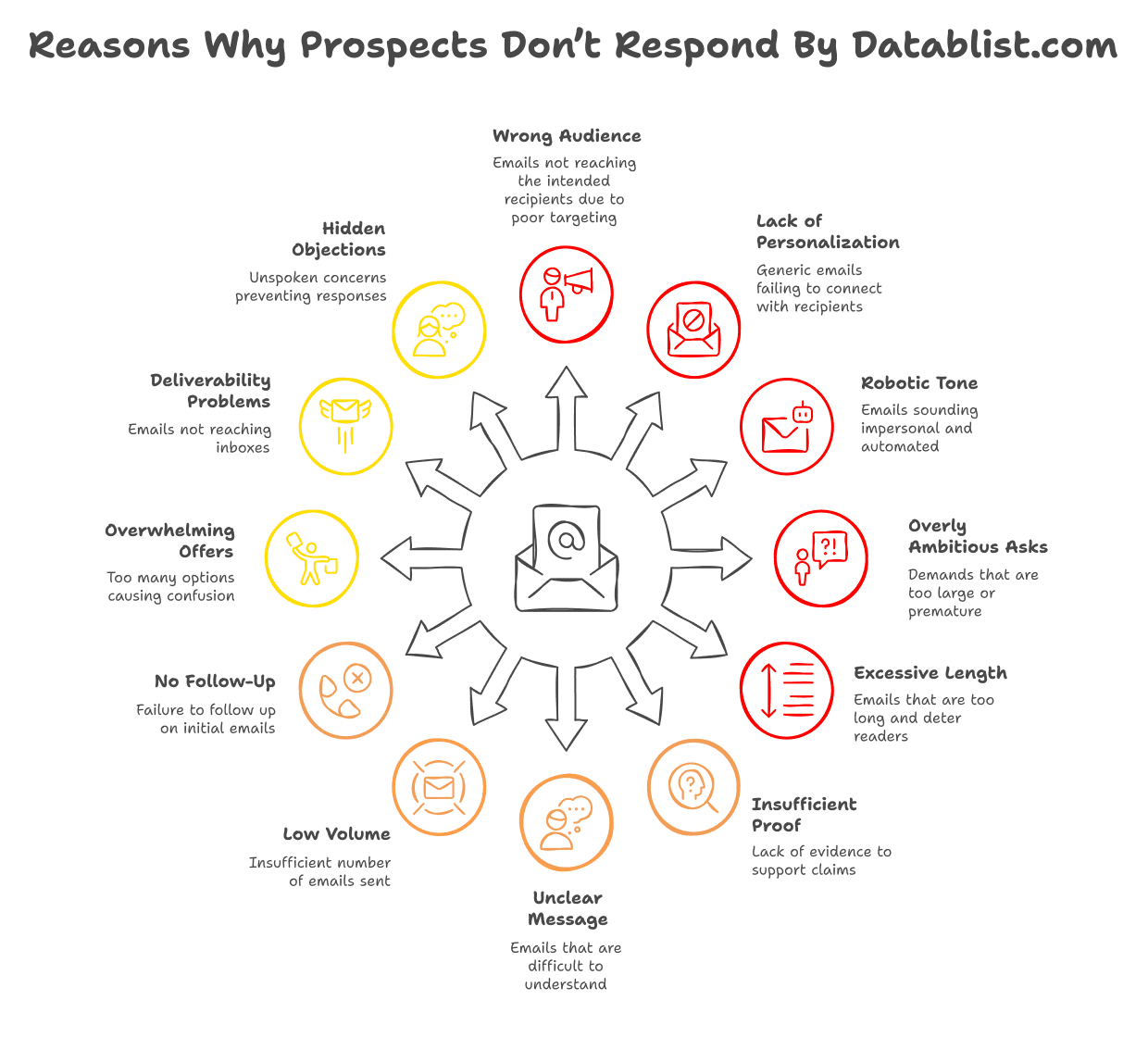
That's why I will give you a short list of the 12 most common reasons why no one is answering your cold emails.
This list is split into tier 1 issues, tier 2 issues, and tier 3 reasons — assuming you already have a good offer, since that remains the foundation of everything.
Summary Of This Article
- Emails are reaching the wrong people - Strategic list building, targeting the right person, and having up-to-date data are crucial for reaching the right audience
- No personalization - Give each recipient a specific reason for your message
- The email sounds too robotic - Prospects shouldn't recognize that you used a template, and your cold email needs to have a natural flow
- Your ask is too big - Asking for a meeting immediately is like proposing on the first date; focus on smaller wins first
- Emails are too long - Busy people won't read lengthy messages from strangers, so keep it short
- No proof of concept - Showing is better than telling, and you need to demonstrate what you can do before asking for meetings
- People aren't understanding your message - If people can't understand your message in two seconds, it's likely to be ignored
- The volume isn't sufficient - Use a meaningful sample before judging a campaign
- You are not following up - People might find your email interesting, but forget to reply, so following up is essential
- You're offering too much, so people get confused - Multiple offerings can cause choice paralysis, so focus on one offering with a small ask
- Email deliverability issues - If no one sees your email, no one will reply
- People have hidden objections - Prospects might have concerns they won't voice directly, so address common objections proactively
- Checklist to get more replies
Tier 1 Reasons Why Cold Emails Don't Get a Reply
1. Reason: You’re Sending To The Wrong Audience
Sending to the right audience seems simple, but most people get it wrong. Here’s a breakdown of the 3 key parts that make the difference between getting replies and being ignored.
Part 1: Strategic list building
One common mistake is building a list from job titles and industries alone, finding email addresses, and sending the same message to everyone. Add a reason each account might need your offer now.
Part 2: Sending to the wrong person
Most people send their emails to CEOs, but the CEO is not always the one who owns the task you're discussing. Sometimes it is an operations manager or CFO. Match the contact to the problem before changing the email copy.
Part 3: Having the up-to-date data
Once you've fixed the first and second problems, you need accurate data to reach your prospects. The problem is that many cold emailers rely on old, outdated databases. This means you're often sending emails to:
- Companies that closed years ago
- People who changed jobs
- Email addresses that don't exist anymore
Being honest with you, the bar has risen, and the standard for a good cold email has increased as well. And if you miss only 1 of these 3 parts, you'll be:
- Wasting your time and resources
- Hurting your business reputation
- And, most importantly, getting no replies.
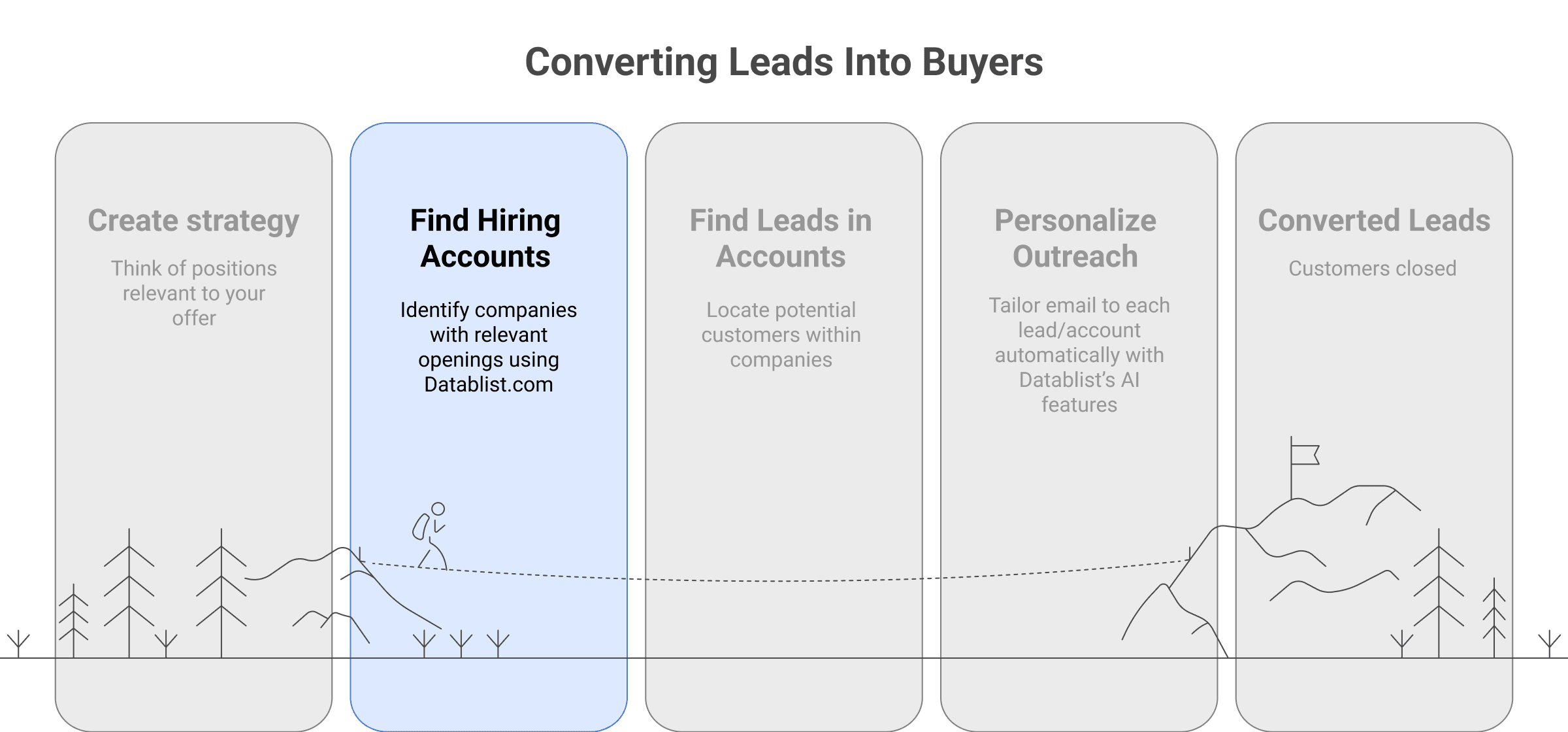
Here’s an example workflow you can use in the future:
- Use the Welcome to the Jungle Jobs Scraper to find accounts that are hiring for positions that match your service or product
- Score leads with AI based on your criteria.
- Use the Waterfall People Finder to find leads within those accounts (up-to-date information).
- Use ChatGPT to personalize the email to each lead and account.
2. Reason: You’re Not Personalizing Your Emails
Your prospect may receive many similar templates. Give them a concrete reason to read yours.
What I mean by that is that you should really pay attention to making your email unique to each person. Remember, personalization doesn't always have to be a fancy first line — it can also be just a bit of human touch that you add to make the person feel that you aren't a scammer, spammer, or something worse.
💡 What Cold Email Personalization Really Is About
Cold email personalization isn't about scraping some LinkedIn post and making a fancy first line — it's about showing your prospect that you're a real human who made the effort to start a conversation between humans.
3. Reason: Your Email Sounds too Robotic
First Thing: Prospects shouldn't recognize that you used a template. This means don't over-template it, and to be clear, I'm not saying that you shouldn't use templates since they can help when systematizing your email campaigns. It means your cold email has to have a natural flow while reading.
Second Thing: A lot of people nowadays, especially since the AI boom, are using variables (e.g., {{Company Name}}), which isn't bad, but if the prospect notices it, then it's bad for you. This is why you always want to clean company names or use AI to generate custom variables.
4. Reason: You Are Asking For Too Much
Think about dating - you wouldn't propose marriage on the first date, right?
When you immediately ask for a meeting in your cold email, you're essentially "proposing marriage" to a complete stranger. This aggressive approach often leads to silence.
Instead, focus on smaller wins first. Remember: Getting a response should be your primary goal, not scheduling a meeting right away.
📘 Don’t Ask For a Meeting. Do This Instead.
Instead of asking prospects for a meeting, make a smaller offer first.
Here are some ideas of what to offer them.
For service-based businesses: Portfolio, short case study, a free competitor analysis
For product-based businesses: Demo video, prototype documentation, free trial
If you do this, you not only increase the chance of getting a response to your cold email, but you are also less likely to end up in the spam folder
5. Reason: Your Email is Too Long
Picture this: You're scanning through 50 unread emails when you spot yet another lengthy message from a complete stranger. How likely is it that you'll respond? I know that I would never reply to a cold email that's too long because I am busy.
Here's the solution: If you really have something valuable to offer to people, then make it short because if it's interesting, they’ll respond, and if it's not, they won't (even if you write them a letter by hand).
"First, 'just get right to the point' in the email. The 'longer the backstory, the worse the deal.'" - That’s what Marc Cuban ($4.2B net worth) said in 2020 about cold email.
Tier 2 Reasons Why Your Cold Emails Get No Response
6. Reason: You’re Claiming Too Much and Showing Too Less
Showing is better than telling, period. But most people don’t get it.
A common problem I see a lot (especially from the people in my inbox) is that nobody is really willing to show what they can do. Remember, if you want people to reply to your cold emails, show them what you can do before they come to a meeting or start working with you.
7. Reason: People Don’t Understand It At First Glance
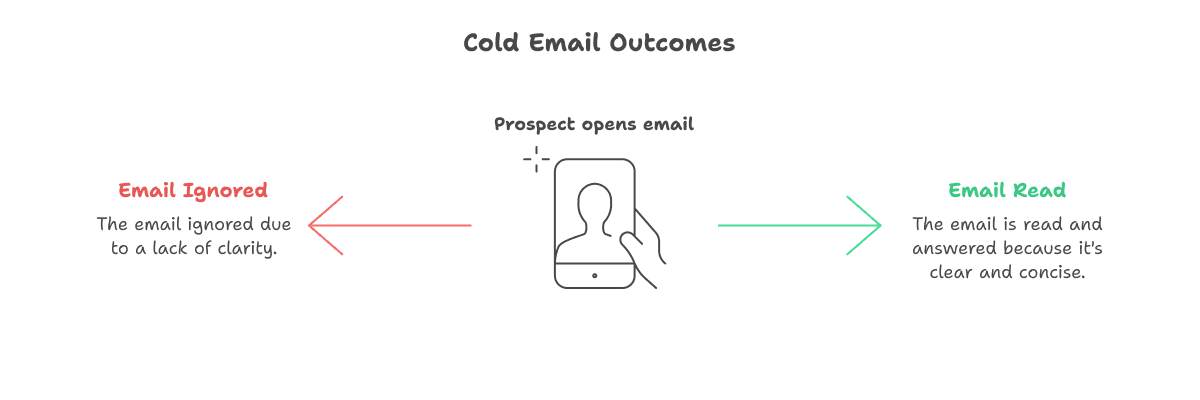
If people don't understand what you want after a two-second glance, then chances are high that your cold email will be ignored. That's not because people are rude but because people are busy, have a lot to deal with, and don't want to spend 5 minutes decrypting messages full of jargon.
Use language someone outside your team can understand on the first read. Name the problem and the next step without internal jargon.
8. Reason: You Are Not Doing Enough Volume
Volume doesn’t just negate luck; volume also forces experience. Here’s what I mean by that:
Before increasing volume, make sure your sample is large enough to reveal a pattern and that the list is relevant. Sending more of an email that bounces or targets the wrong role will not fix either problem. Compare replies, bounces, and opt-outs by audience segment before scaling.
9. Reason: You Are Not Following Up
A lot of sales experts say, "The money lies in the follow-ups," and I agree.
How many times did you tell yourself: I’ll reply later, I’ll call him later, I’ll … later?
Prospects may have missed your message or postponed a decision. A follow-up can add context, but it should be useful even to someone who did not read the first email.
For example: “Hi Maya, I noticed your team is hiring two data analysts. If cleaning duplicate account records before their first campaign is on your list, I can share a short checklist. Would that help?” Change the hiring detail and the offer to facts you have verified for that recipient.
❗️ Don’t Over-Do It With Follow Ups
Stop if a recipient asks you not to contact them. Make each follow-up relevant and follow the rules that apply to your recipients and sending platform.
Tier 3 Reasons Why Cold Emails Get Ignored
10. Reason: You’re Offering Too Much
If you have multiple offerings and are mentioning more than one of them in your cold emails, prospects often get confused and don't know what to choose.
This is called choice paralysis, and it's a common reason why people don't respond.
Here's how to solve this: Choose one offering to highlight and make a small ask. This will increase your reply rate significantly.
11. Reason: Your Email Deliverability Is Broken
If messages bounce or land in spam, inspect your sending setup before rewriting the subject line. Check SPF and DKIM authentication, your domain's DMARC policy, bounce reports, and whether recipients can opt out where required. Gmail's sender guidelines explain the current authentication and unsubscribe requirements for messages sent to Gmail accounts. Your email platform can show whether individual messages were accepted or rejected.
12. Reason: People Have Hidden Objections You’re Not Addressing
Hidden objections can kill your cold email response rates without you even knowing it.
For example, Prospects might worry about implementation challenges, but they won't tell you this directly. That's why it's crucial to address common objections proactively in your cold emails, showing you understand their concerns before they even voice them.
Checklist for Cold Email Success
- Make the purpose and ask clear in a short message
- Clean company names (or don’t use them at all)
- The call to action is to be a soft “Yes” or “No” question
- A 15-year-old intern has to understand it
- Your account list has to be validated
- Don’t aim for a meeting but an answer

Conclusion
Cold email can start conversations when the recipient, offer, and message fit. Check delivery first, then test the audience and copy on a small sample before increasing volume.
Just be sure that you're showing the right ad to the right people by constantly improving your list and copy, and ensuring that the prospect thinks you crafted a unique email only for them.
Frequently Asked Questions About Why People Don’t Reply To Cold Emails
Does Cold Email Still Work?
It can work when your message reaches a relevant person and offers a useful next step. Measure replies and other outcomes for your own audience; cold email practices and sender requirements change over time.
Is Cold Email Dead?
No, cold email isn’t dead, but people who can’t make it work say it’s dead, but in reality, cold email is just evolving very fast, and people aren’t adapting at the speed the market and innovators are. That’s why people say cold email is dead. (Don’t listen to them, adapting is better)
How To Get More Replies to Cold Emails?
The two factors that will drive the most replies to your cold emails are definitely your list and your copy, since the list reflects who you are writing to and the copy is what you're writing them. Another important factor is to make the ask as simple and small as possible to drive a real conversation.
Why Aren't My Cold Emails Working?
If your cold emails aren't getting responses, it's likely due to several factors, such as: targeting might be off, too long or impersonal emails, or you might not be following up effectively. The key is to identify which of these issues is affecting your campaign and make targeted improvements.
What is the 30 30 50 rule for cold emails?
Being honest, I've never heard of this rule, even though I am a member of multiple cold email communities. There might be others who try to invent their own definitions to sound like experts, but I prefer being straightforward about it.