To bulk update existing items, import a CSV or Excel file and match its rows to a unique identifier in your collection. Choose whether to fill empty fields or replace existing values, and whether unmatched rows should create new items.
For example, match customers by Customer ID to refresh their company names without importing a second copy of every customer.
Define a unique identifier
To perform bulk updates, start with defining a unique identifier. Select one of your properties that must have unique values.
Use a stable identifier that refers to one record, such as a customer ID or SKU. An email address can work when it is unique in your list; shared inboxes and phone numbers are not always unique to one person. Check the values before using them as a match key.
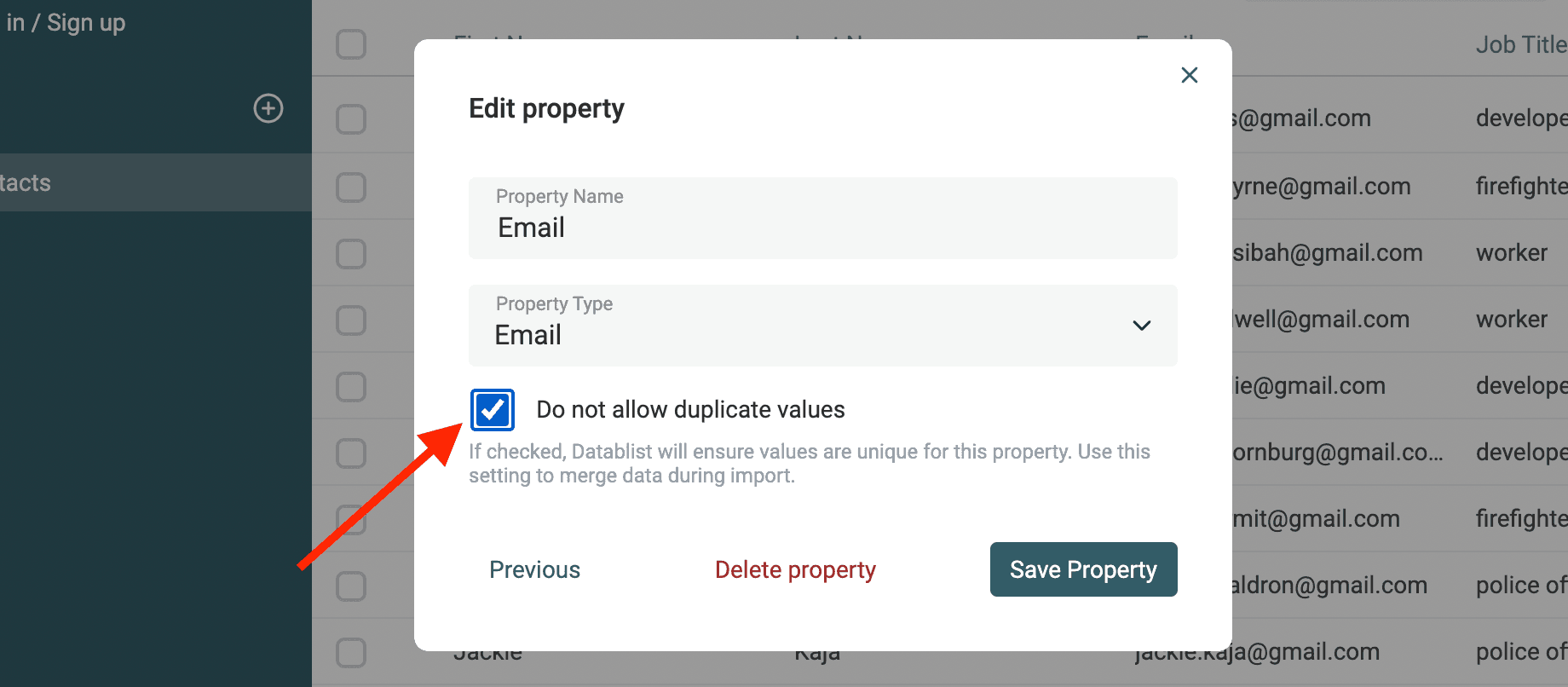
Then, tell Datablist to use the property as a unique identifier by enabling the Do not allow duplicate values option. Open the Manage Properties modal and edit your property so Datablist ensures it has unique values.
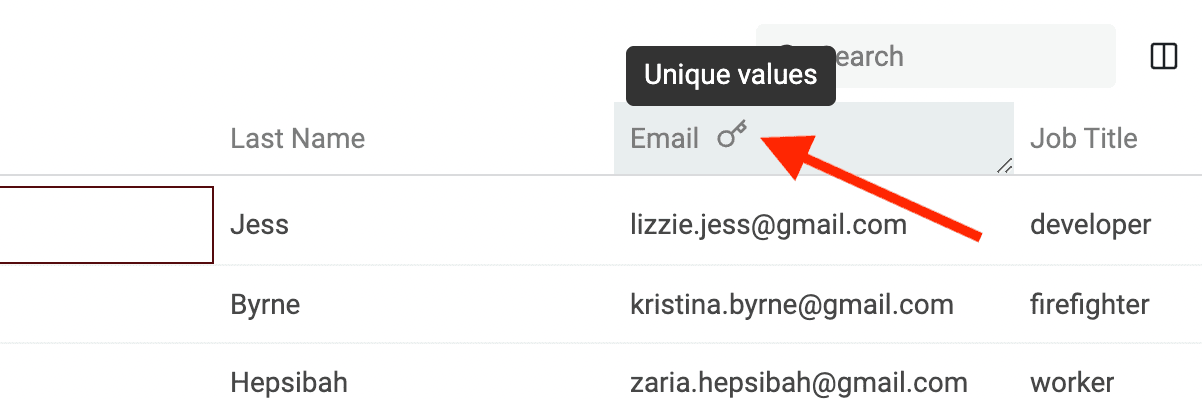
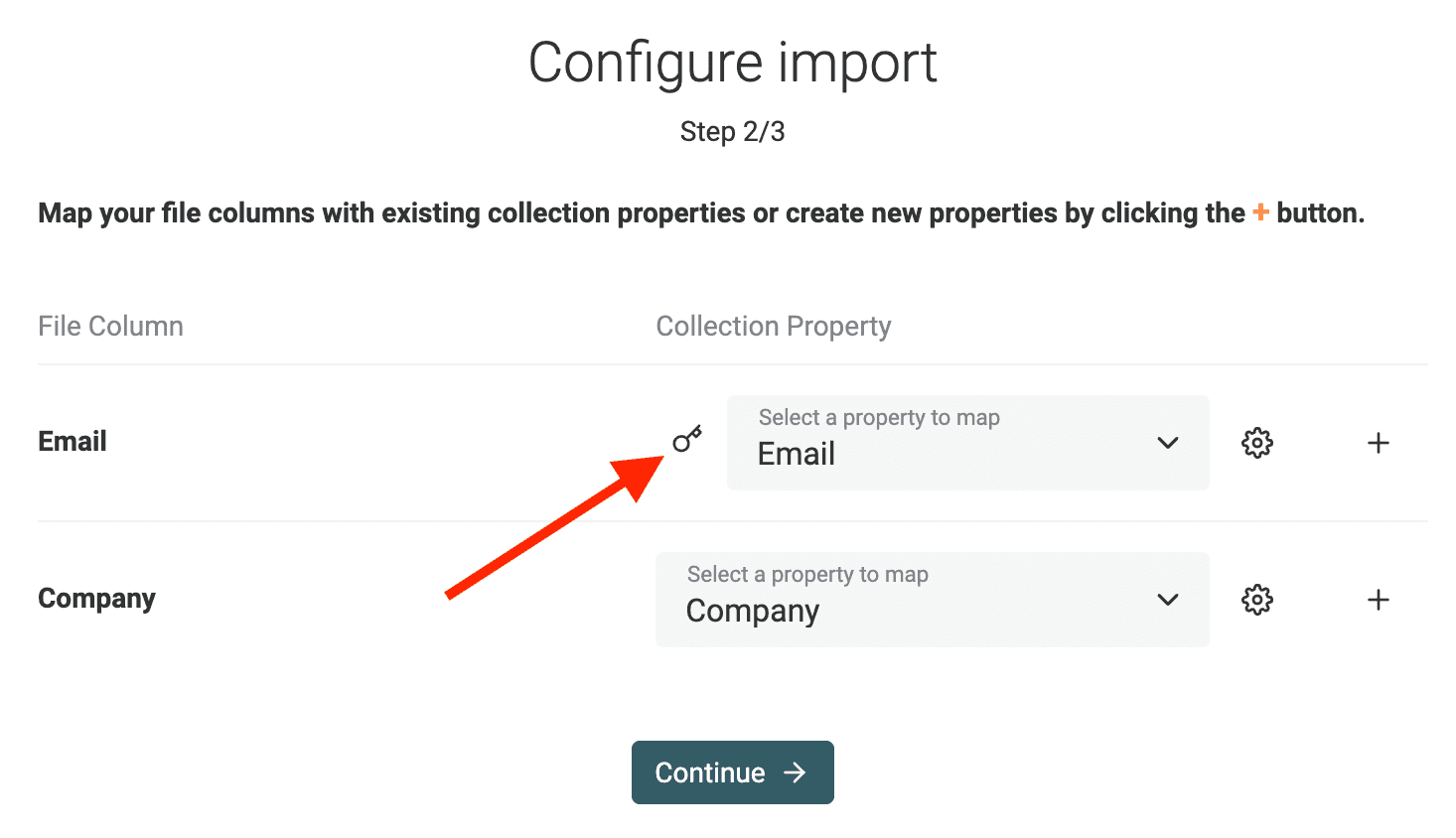
Once your property is configured as unique, a Key symbol will appear in the property's column in the Data Table.
Remove duplicates
Configuring a property with a unique constraint ensures no duplicates can be added afterward but it doesn't ensure your existing items are unique.
To avoid any bad surprises, check for duplicates on your identifier.
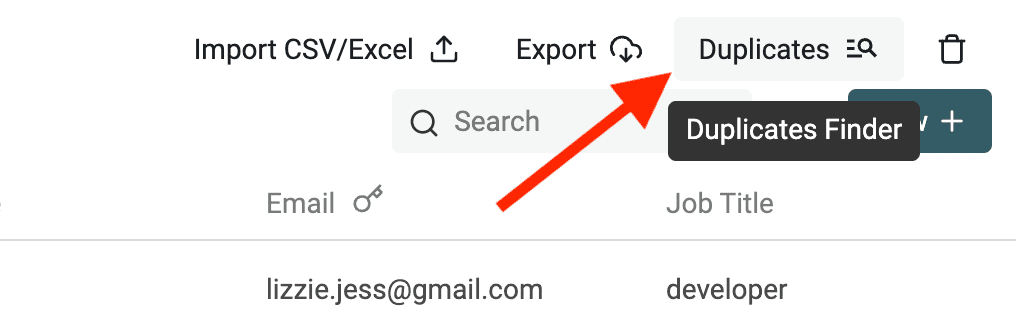
Use the Duplicates Finder to check your identifier before importing updates. Review any duplicate groups and decide which records to keep or merge.
Then, choose Selected Properties.
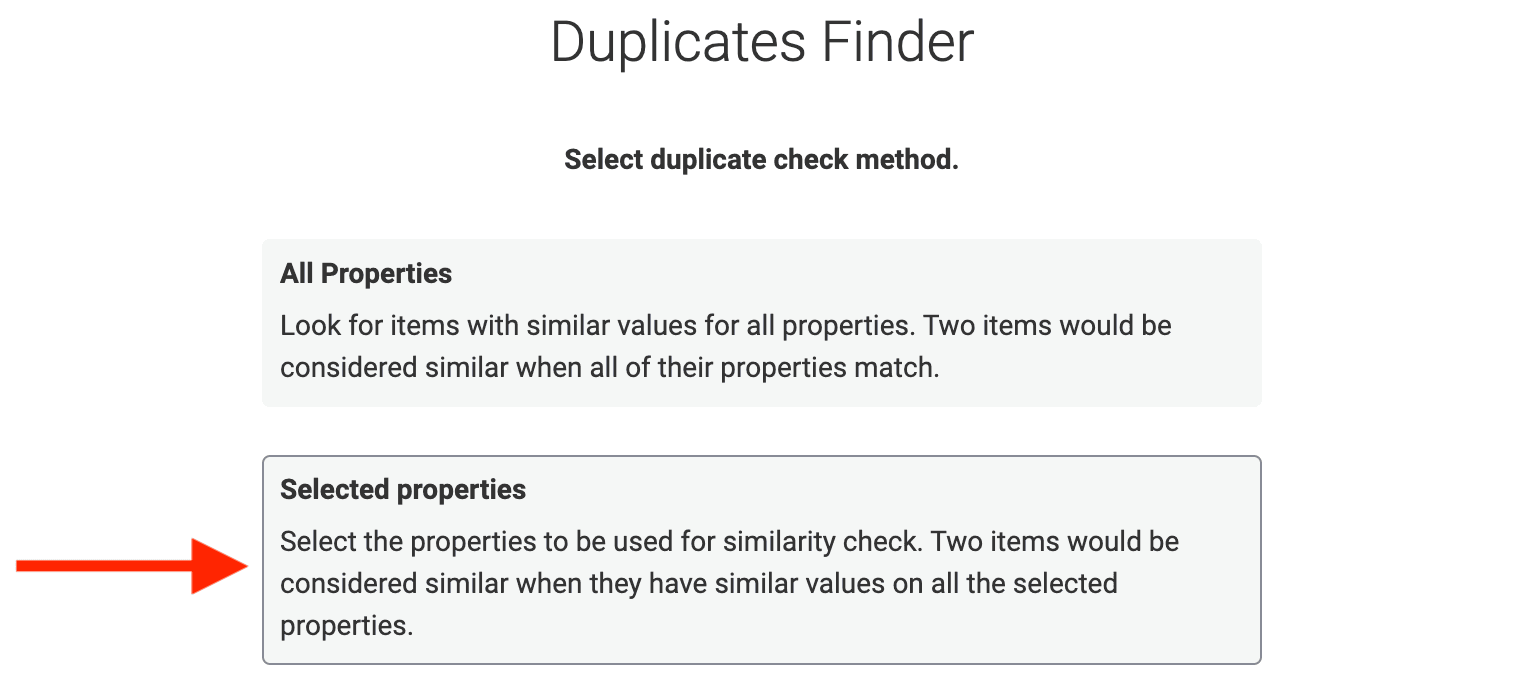
And select your identifier property.
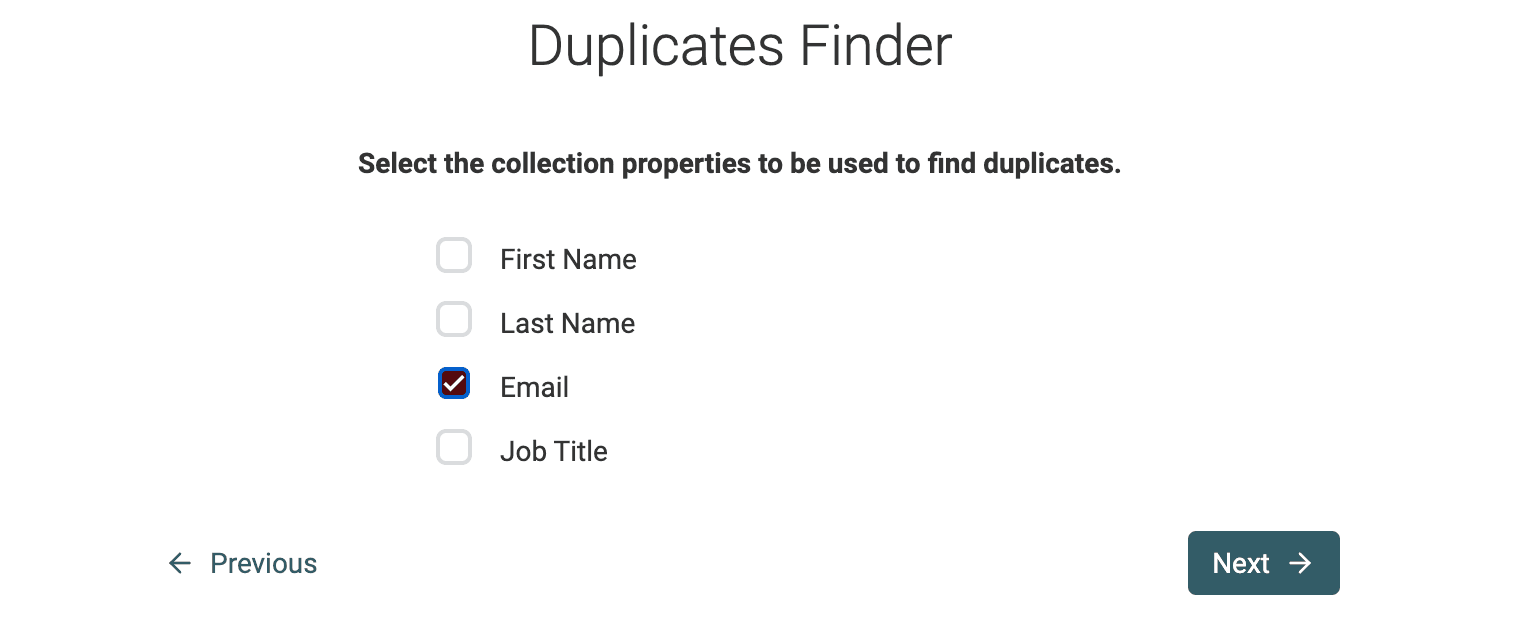
👉 If duplicates are found, merge them.
Bulk update items
Import a CSV or Excel file containing your identifier column and the fields to update. Map the identifier to the matching collection property. Matching rows follow your merging mode; unmatched rows follow your Join Type choice.
- Import all rows and match when possible updates matching items and creates new items for unmatched rows.
- Import only matching rows skips unmatched file rows. Choose this when the file should update existing items without adding new ones.
If spaces around identifiers should not affect a match, enable Ignore leading and trailing spaces. Preserve IDs with leading zeros as text, and check that the same identifier format is used in the file and collection.
If your collection looks like:
 Name        | Email
 John        | john@gmail.com
 Frank       | frank@yahoo.com
And Email is your unique identifier, you can upload a file to edit the Names, or to add new properties to your collection.
For example, importing a file with:
 Name            | Email
 John Doe        | john@gmail.com
 Frank Ciname    | frank@yahoo.com
With Hard Merge, the matching items' Name values become John Doe and Frank Ciname. With Soft Merge, the existing names stay unchanged because they are already filled.
And importing a file with:
 Email                |   Company
 john@gmail.com       |   Google
 frank@yahoo.com      |   IBM
Will add a new property to your collection and add the company values to your existing items.
Mapping identifier
When mapping your file columns with the collection properties, please check that a Key icon appears on your identifier column.
Merging options
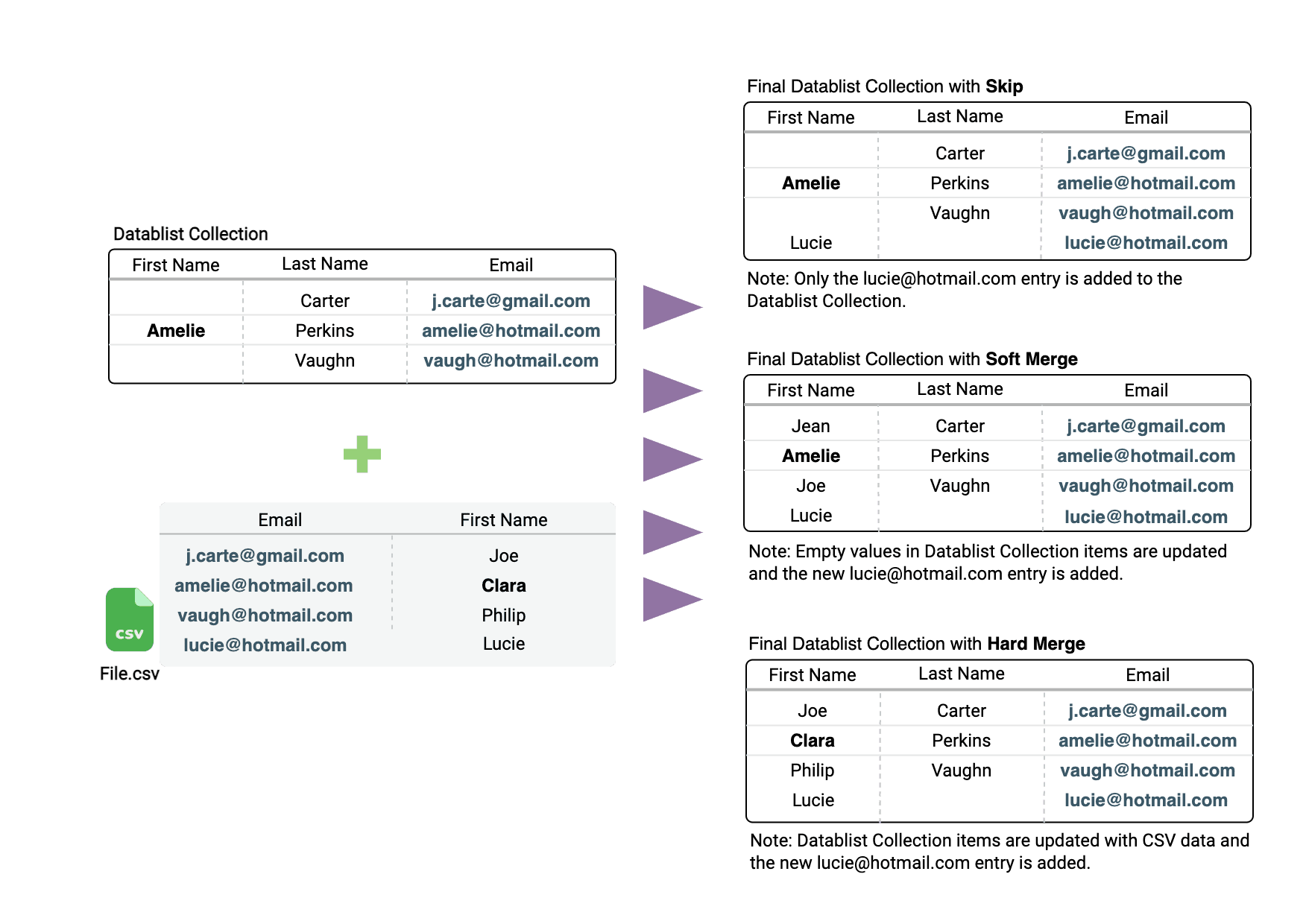
Choose the merging mode based on what should happen to matching items:
- Skip: Keep the matching item unchanged and skip that file row.
- Soft Merge: Fill empty properties while keeping existing values.
- Hard Merge: Apply the imported values to the matching item, replacing existing values in the mapped properties. Check blank fields in your file before using this mode.
Check the result
Export a backup first, then try a small file with a known matching ID and an unmatched ID. Confirm the updated values, the item count, and how empty fields were handled before importing the full update.
For a worked example of combining two files by a key, see joining CSV files by a column.