Use Edit > Merge Properties to join two or more text columns into one new property. Select the source properties in the order you want, choose a separator, inspect the preview, then run the merge. The original properties remain in the collection.
For example, merging First Name = Ada and Last Name = Lovelace with a space produces Ada Lovelace. This helps when cleaning scraped data or combining files whose fields have different shapes.
Merging data from multiple properties is perfect to:
- Consolidate multiple email addresses into a single email address property
- Create a Full Name property using First Name and Last Name
- Join several address parts into a single Address property
Step 1: Open the Merge Properties tool
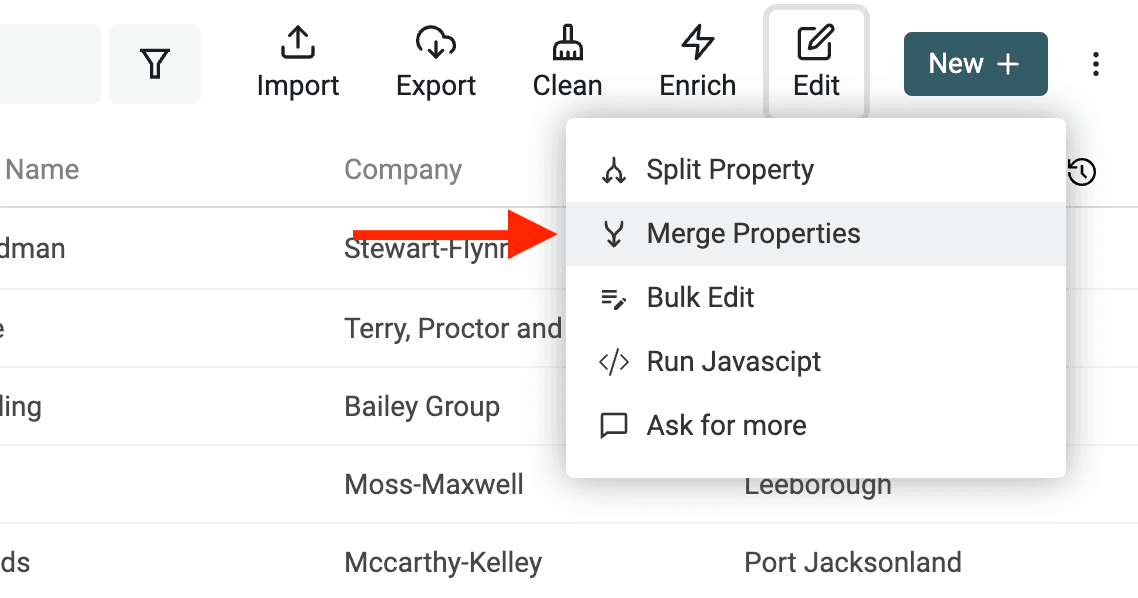
Open the "Merging Properties" tool in the "Edit" menu.
The tool selects the items to process in this order:
- If you have selected items in your collection, it will process them
- If you have a filter or a full-text search term, it will process the filtered items
- Otherwise, it will process all your collection items
Check the scope before the preview. A selected subset takes precedence over a filter, so an accidental selection can produce fewer merged values than expected.
Step 2: Define properties and delimiter
You can merge as many properties as you want. And a minimum of two properties is required.
In the Merge Properties tool, you will see all your Text based properties. Other data types are not allowed.
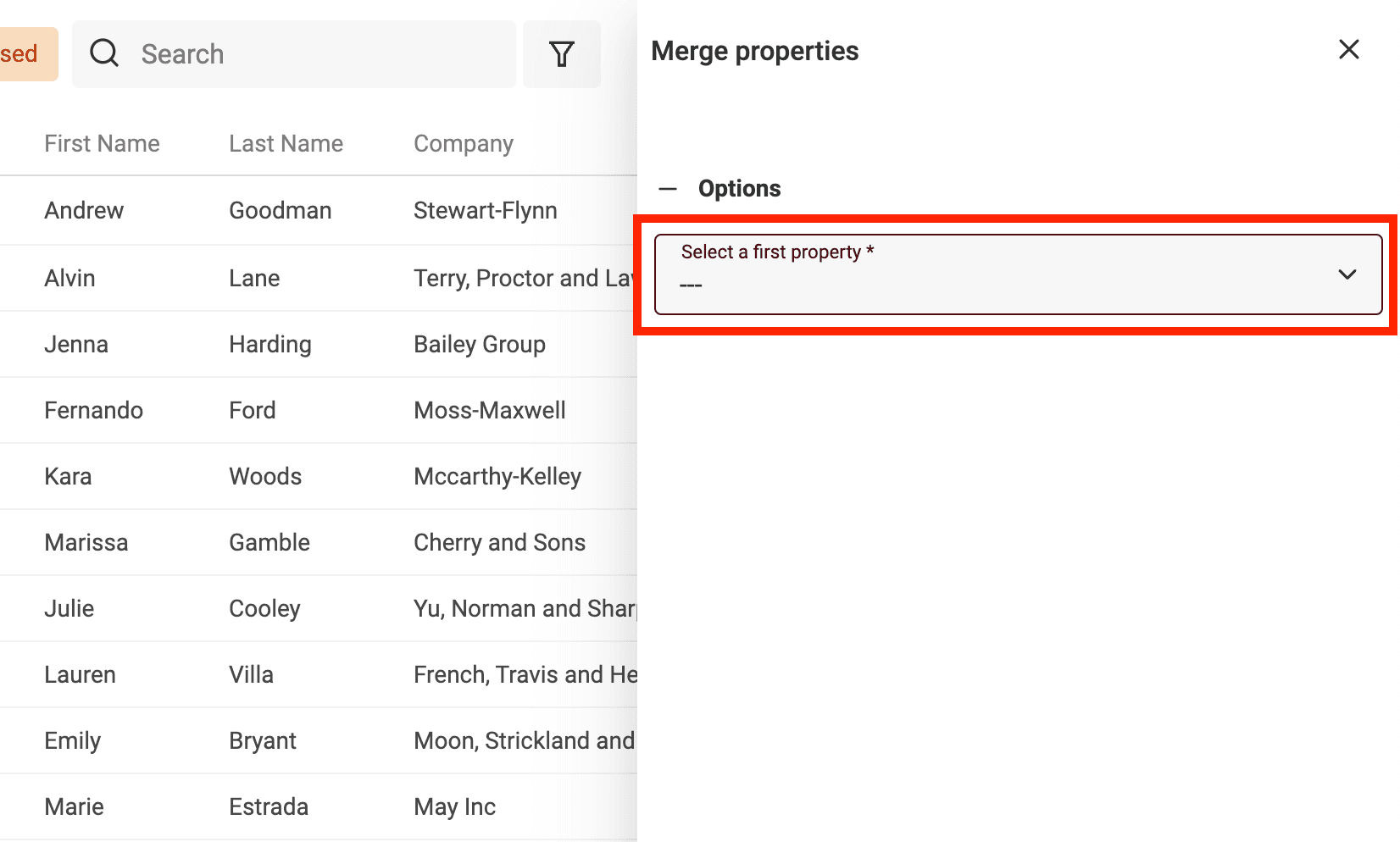
Start by selecting a property.
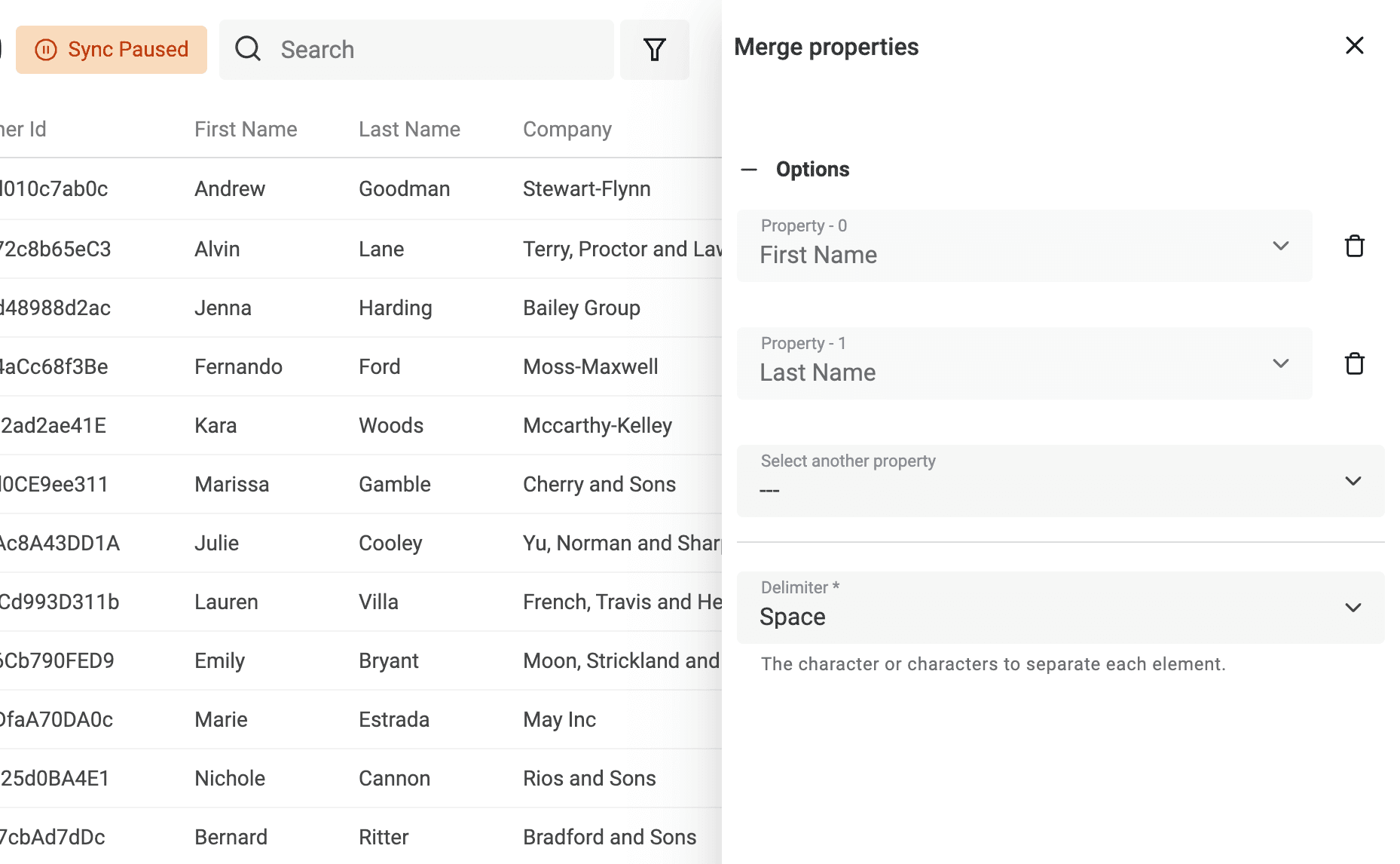
Then select your other properties. A new select input appears every time you add a property to merge.
Select delimiter
Then, select the delimiter to use. Common delimiters are available:
- Space
- No Delimiter: Texts will be concatenated directly
- Comma
- Semicolon
- Dot
- Tab
- New line
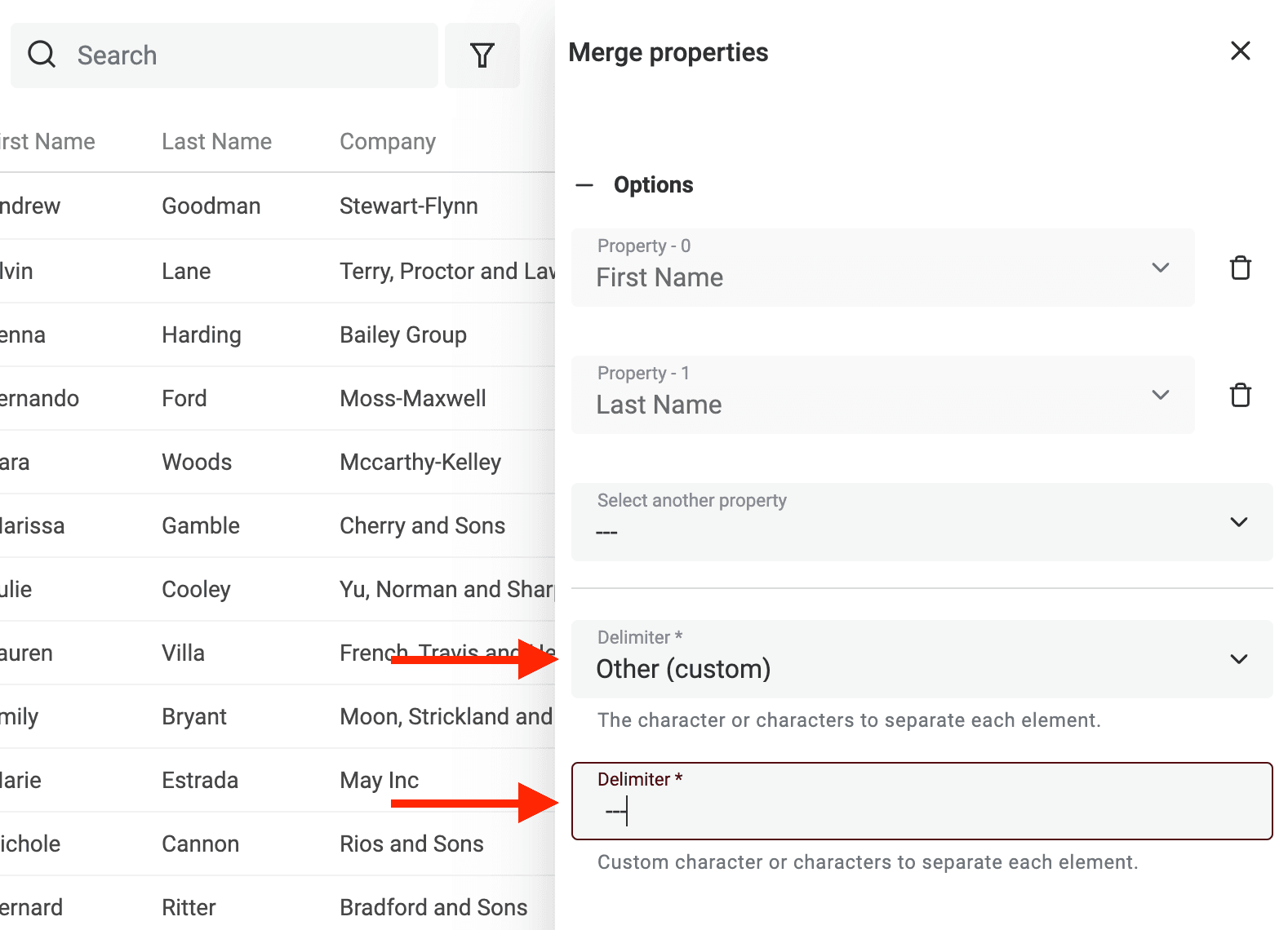
Or you can write custom delimiter characters.
Note on the merging algorithm
The merge skips missing and empty values, so it does not add a separator for an empty property. It does not remove whitespace from nonempty text: review leading or trailing spaces in the source columns before merging.
For example, for the following data:
First Name        Last Name
Jean              Bond
                  Richie
With a comma (,) delimiter, the resulting property will contain:
Full Name
Jean,Bond
Richie
On the second item, the first property has an empty value so the delimiter is not used.
Step 3: Preview and run
A preview step is shown before running the merging algorithm. It runs the algorithm on your first items without saving the results.
A new property will be created to store the merged data. Its initial name combines the source property names; rename it after the run. If you need to replace an existing column, inspect the new values first and make that change separately.
Note: The merging algorithm runs without updating the source properties.
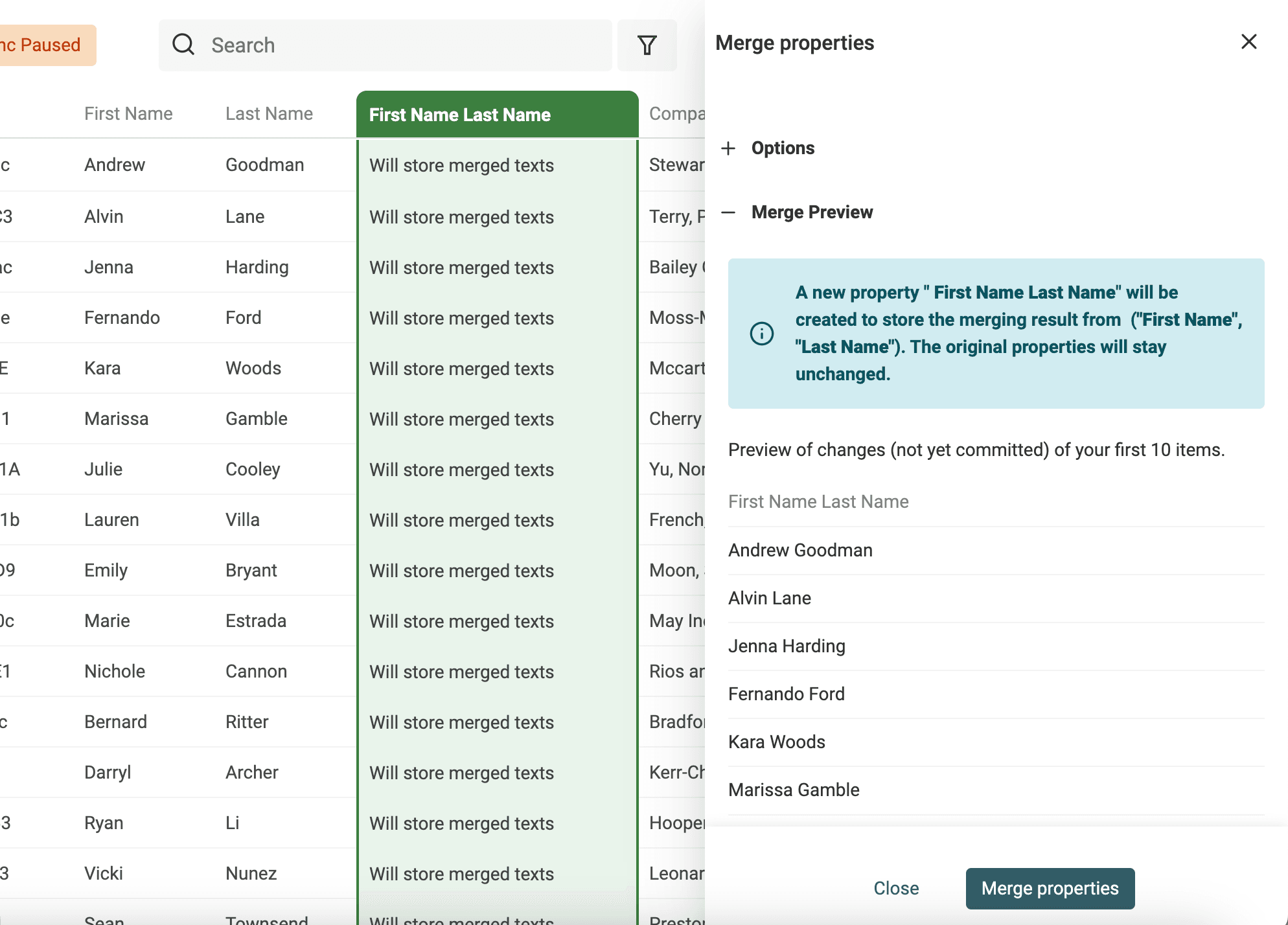
If the results look good, click on "Merge Properties" to run the algorithm on all your current items.
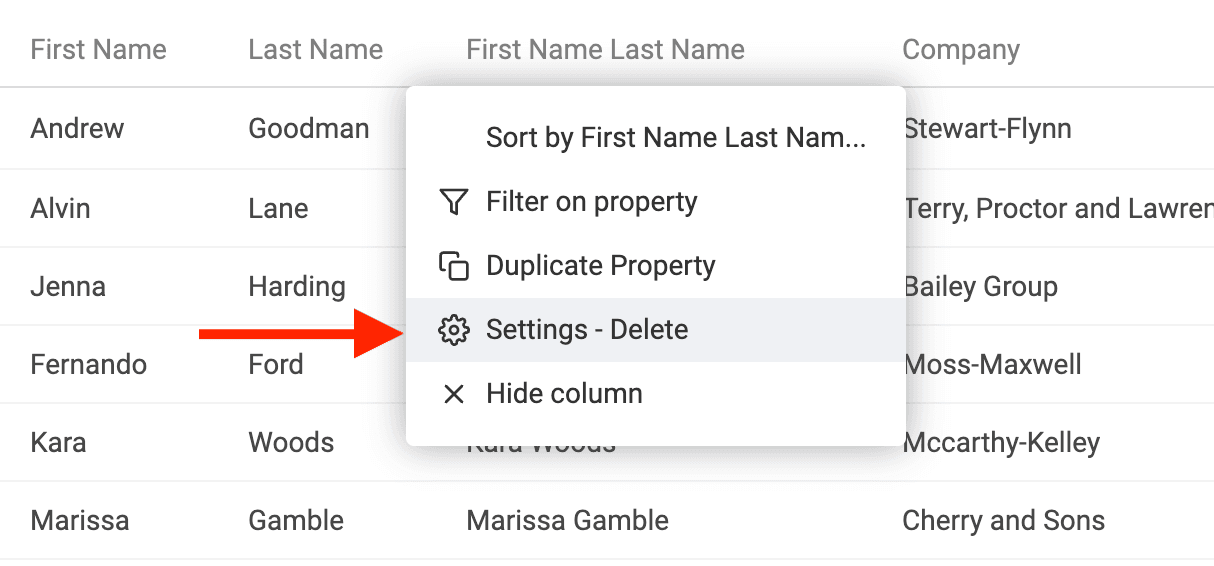
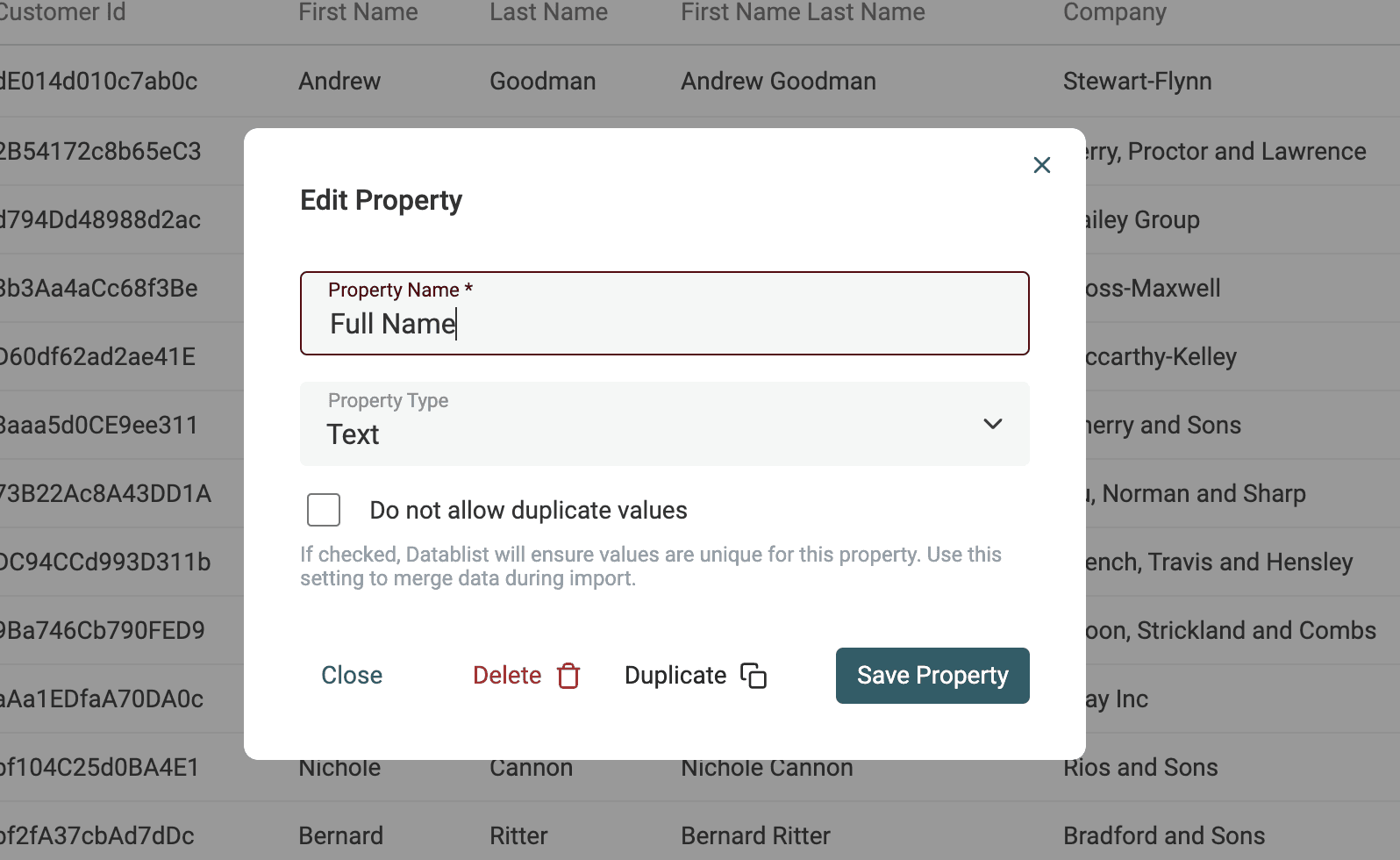
To finish up, rename the property using the property settings.
Use Cases:
Consolidate multiple email addresses into a single email address property
If you are consolidating several CSV files or collections into a master collection, you can end up with multiple properties storing email values.
The Merge Properties tool is perfect to consolidate all your email addresses into a Emails single property.
For items with only one property containing data, the result property with get a single value. If multiple properties can have data for an item, use a comma or semicolon delimiter to merge the email addresses.
Create a Full Name property using First Name and Last Name
In leads management, you are always moving from separated First Name, Last Name properties and a single Full Name property.
Use Datablist Merging Properties with a space delimiter to reconstruct Full Name values from First Name and Last Name.
Join several address parts into a single Address property
If you are dealing with Street, City, Zip Code, State, etc. parts and want a single "Address" column, use the merging algorithm with a comma delimiter to create a single Address property.